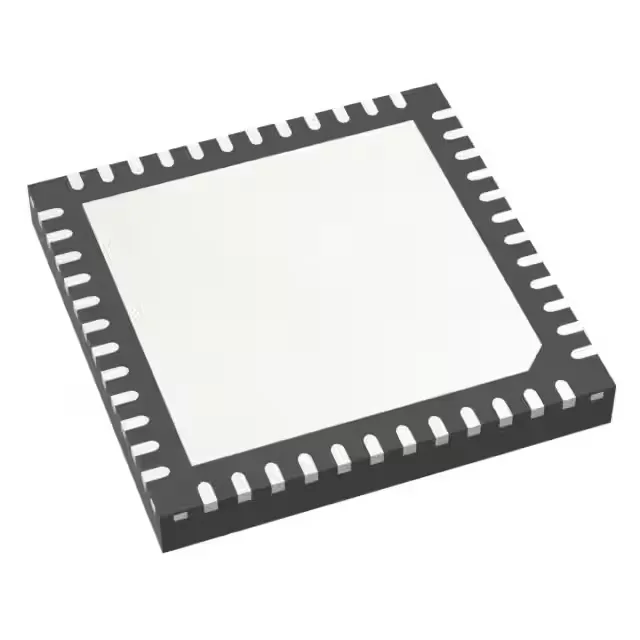
STMicroelectronics STM32F072CBU7 — Microcontrollers & Processors (MCU / MPU / DSP)

STM32F072CBU7 ARM Cortex-M0 MCU, 48 MHz, 128 KB Flash

MPNSTM32F072CBU7
Active

STMicroelectronics STM32F072CBU7, ARM Cortex-M0 32-bit MCU, 48 MHz, 128 KB Flash, 16 KB SRAM, USB + CAN, 48-UFQFPN 7x7, -40°C to 105°C.

$3.1758Ref. price · indicative, final on quote
Independent supplier — new & surplus stockAuthenticity-screened · ESD-safe packingListing updated Jul 2026

Specifications

STM32F072CBU7 specifications
ParameterValue
SeriesSTM32F0
MountingSurface Mount
Oscillator typeInternal
Program memory typeFLASH
Voltage - supply (Vcc (Vdd))1.65V ~ 3.6V
Operating temperature-40°C~105°C(TA)
Speed48MHz
PackageTray
RAM size16K x 8
Core size32-Bit Single-Core
PeripheralsDMA, I²S, POR, PWM, WDT
ConnectivityCANbus, HDMI-CEC, I²C, IrDA, LINbus, SPI, UART/USART, USB
Number of i (O)37
Core processorARM® Cortex®-M0
Case48-UFQFN Exposed Pad
Data convertersA/D 10x12b; D/A 2x12b
Program memory size128KB (128K x 8)

Product details

SWD debug stays alive even with the independent watchdog enabled, which saves time during firmware bring-up.

The 48 MHz core delivers about 44 DMIPS, which is sufficient for sensor fusion, CANopen node processing, or a USB CDC/ACM virtual COM port without choking. The 128 KB Flash can hold a FreeRTOS kernel, a USB stack, and a CANopen stack with room left for application code. The 16 KB SRAM handles a couple of moderate-sized buffers — enough for a 1 KB USB endpoint pair plus a CAN message queue. If your application needs more RAM for frame buffering or a larger heap, you'll want to step up to the STM32F072 with 32 KB SRAM (STM32F072VB), but for most control and gateway tasks this part keeps the BOM lean.

USB + CAN on a single 48-pin QFN — board-space saver

Having both USB 2.0 full-speed device and CAN 2.0B on the same 48-pin package eliminates a second MCU or an external USB-to-CAN bridge in dual-interface designs. The 37 GPIOs leave enough pins for a few sensors, an SPI flash, and an I²C display while still routing the USB DP/DM and CAN TX/RX pairs. The pad also serves as a low-inductance ground return for the USB transceiver, which helps with signal integrity on the DP/DM lines.

ST lists the STM32F072CBU7 as Active. That means no last-time-buy notice is in effect, and the part continues to be manufactured and supported through ST's distribution channel.

Frequently asked questions

What is the flash memory size of STM32F072CBU7?

That is enough for a USB stack, a CANopen node, and a FreeRTOS kernel with application code to spare.

Does STM32F072CBU7 have USB and CAN interfaces?

Yes. This makes it a strong candidate for a USB-to-CAN gateway or a dual-interface control node on a single chip.

What is the difference between STM32F072CBU7 and STM32F072CBT6?

The two parts share the same core, Flash, SRAM, and peripheral set. The difference is the package: the CBU7 is a 48-UFQFPN (7x7 mm) with an exposed pad, while the CBT6 is a 48-LQFP (7x7 mm) without an exposed pad. The UFQFPN gives better thermal performance if you need to dissipate more than about 400 mW, but the LQFP is easier to hand-solder and inspect. Both are active and pin-compatible on the same 48-pin footprint, so a board could be laid out for either.

What is the maximum operating frequency of STM32F072CBU7?

The core runs at 48 MHz maximum. At that speed the Flash requires one wait state for zero-wait access; the STM32F0's prefetch buffer helps keep single-cycle execution for most instructions. For timing-critical loops, consider placing code in SRAM or using the ART Accelerator.