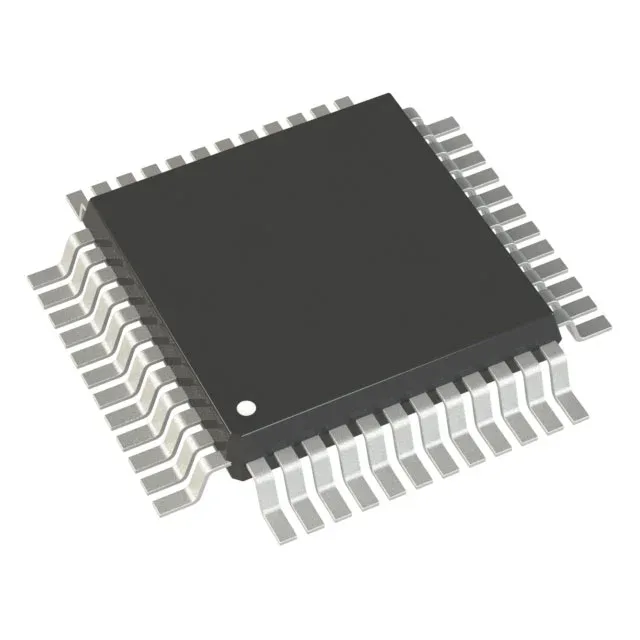
The 48 MHz clock speed from the internal oscillator means the CPU can execute most single-cycle instructions at 48 MIPS, which is adequate for real-time control loops like sensor polling at 10 kHz or UART data handling at 115200 baud without a peripheral DMA offload. The Cortex-M0 core uses the Thumb-2 instruction set, so code density is better than a classic 8051, but there is no hardware divide or single-cycle multiply — budget around 12 cycles for a 32-bit multiply if your algorithm needs it. The flash wait state is zero at 48 MHz, so no pipeline stall penalty for code fetches.
Supply range and I/O — fitting the rail
The 26 I/O pins are 5 V-tolerant on most ports, which simplifies interfacing to legacy 5 V peripherals like some LCD modules or optocoupler inputs. The 12-channel 12-bit ADC (A/D 12x12b) runs from the same supply, so the analog reference is VDD — plan for a clean supply rail if you need better than 10-bit effective resolution.