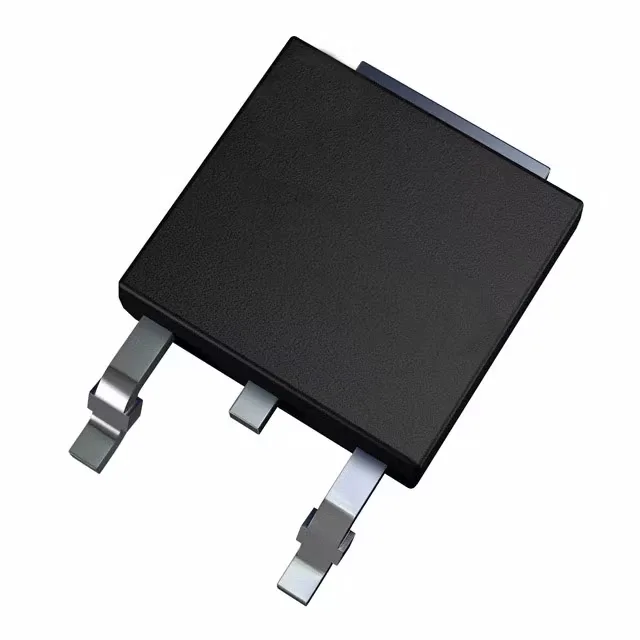
950 V N-channel MOSFET in DPAK — the high-voltage workhorse
The STD5N95K3: The 3.5 Ohm maximum Rds(on) at 10 V gate drive sets the conduction loss floor — at 2 A the dissipation runs about 14 W, so the 90 W package limit leaves thermal headroom for a properly heatsinked DPAK.
Gate drive and switching — what the 10 V spec means
The drive voltage for rated Rds(on) is 10 V, which is typical for standard-gate-threshold MOSFETs — not a logic-level part. The gate threshold maximum is 5 V at 100 µA, so a 5 V logic output won't fully enhance the channel; you need a gate driver that swings to 10 V or a bootstrap supply. Gate charge is 19 nC at 10 V, which is modest — a small driver IC or even a discrete totem-pole can switch it fast enough for a 70–100 kHz flyback without excessive cross-conduction. Input capacitance is 460 pF at 25 V drain, so the gate drive loop inductance matters more than the drive current capability for clean switching edges.
Package and mounting — DPAK thermal reality
The STD5N95K3 comes in the DPAK (TO-252) surface-mount package. The exposed tab on the top is the drain connection — it needs a good copper pour and via stitching to the inner-layer ground plane to get the heat out. Without that thermal management, the 90 W maximum dissipation is theoretical; in practice, at 4 A continuous you'll need forced air or a heatsink clipped to the tab. The package suits automated assembly, and the surface-mount footprint saves board space versus a TO-220 through-hole part in the same voltage class.