800 V N-channel — what it handles and where it fits
That 800 V ceiling puts it squarely in offline flyback converters, PFC stages, and 2-switch forward topologies where the primary-side switch sees the full rectified DC bus plus reflected voltage.
Gate drive and switching — what the numbers mean
Gate charge totals 87 nC at 10 V, which is moderate for an 800 V part. The recommended drive voltage is 10 V to achieve the rated Rds(on); driving it from a 12 V rail is fine, but stay within the ±30 V Vgs max. The 4.5 V threshold at 100 µA is a typical logic-level threshold for a standard MOSFET — not a sub-1 V logic-level part, so a 5 V gate signal from a microcontroller will not fully enhance it.
Thermal budget and derating
Maximum power dissipation is 190 W at case temperature, but that is the theoretical limit with an ideal heatsink. In a real D2PAK layout on a 2-layer board with 1 oz copper, the effective dissipation is much lower — expect to derate to around 50-60 W continuous with a heatsink on the tab. The junction temperature range is -55 to 150 °C, so the part can live in hot environments like a sealed power supply or an outdoor telecom rectifier. If the ambient is 85 °C, the 10.5 A rating at 25 °C must be derated per the datasheet curve — the actual continuous current at 100 °C case temperature is roughly 7 A, not the full 10.5 A.
Package and mounting — D2PAK realities
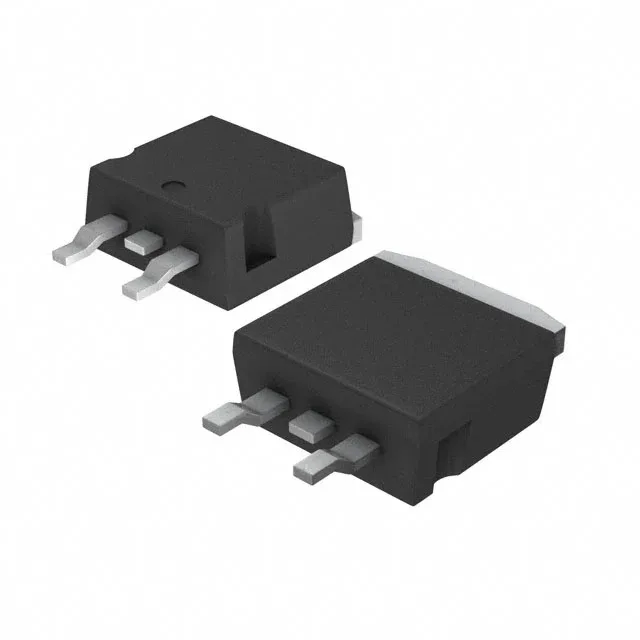
The STB12NK80ZT4 comes in a TO-263-3 (D2PAK) surface-mount package with the tab as the drain connection. The exposed metal tab needs a good thermal and electrical connection to the PCB copper pour — a minimum of 600 mm² of 2 oz copper on the top layer is typical for dissipating 30-40 W. The part is also available in Cut Tape (CT) and Tape & Reel (TR) options, which affects how it is fed into a pick-and-place line. For a rework tech: the D2PAK tab is large enough that a standard hot-air station with a 10 mm nozzle can remove it, but the board needs preheating to 100-120 °C to avoid lifting the pad.