What the 28 V input and 10 µA Iq mean for your rail
The ST730MR is an adjustable positive LDO from STMicroelectronics that delivers up to 300 mA with a 28 V maximum input and an adjustable output from 1.2 V up to 26.8 V. The headline number here is the 10 µA quiescent current — that's the current the regulator burns just to stay alive, and at this level it's sized for always-on rails in automotive body controllers, industrial sensors, and battery-backed systems where every microamp matters. The PSRR starts at 75 dB at 1 kHz and rolls off to 35 dB at 100 Hz, which is typical for a low-Iq LDO — you'll want a small ceramic cap on the output to keep the 100 Hz ripple from passing through.
Dropout and protection — real-world margin
Maximum dropout is 1.2 V at the full 300 mA load, so a 3.3 V output needs at least 4.5 V input to regulate cleanly. That's a 1.2 V headroom budget — fine for a 5 V rail but tight off a 3.6 V battery cell. On-chip protection includes current limit and thermal shutdown, so a shorted output won't blow the part, but it will cycle in and out of thermal limit if the fault persists.
Package and temperature — industrial and automotive capable
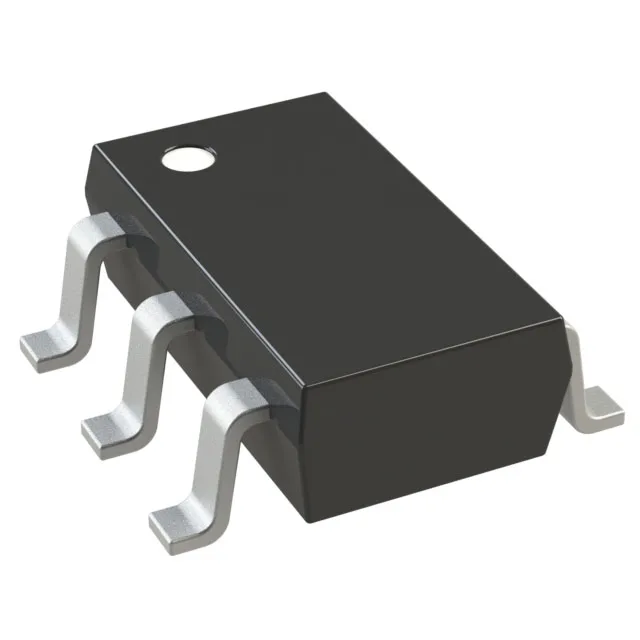
The ST730MR comes in the SOT-23-5 package (also listed as SC-74A / SOT-753), a common five-pin footprint with a single ground pin and no exposed pad. Surface-mount only, and with no thermal pad, the 300 mA output at high ambient will be limited by the PCB copper area — expect to derate above 85 °C ambient unless you have a good ground-plane pour.
Sourcing and lifecycle — still a current-production part
It's ROHS3 compliant.