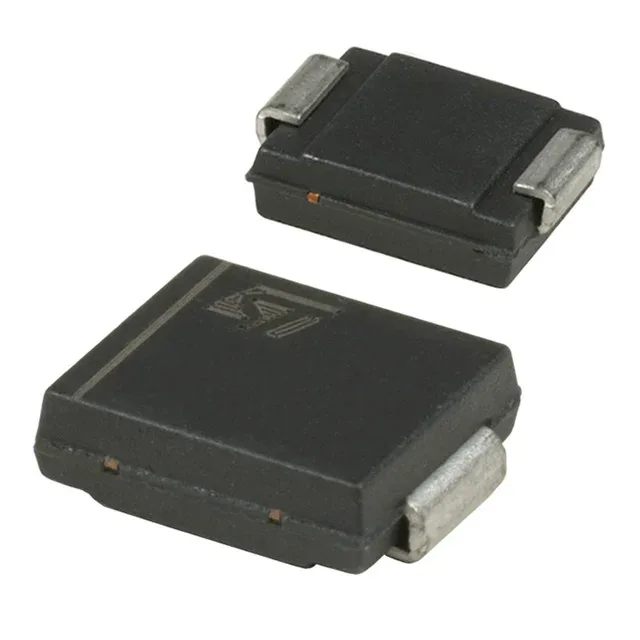
STMicroelectronics SMCJ22A-TR — Circuit Protection

STMicroelectronics SMCJ22A-TR TRANSIL TVS, 22V Standoff

MPNSMCJ22A-TR
Active

STMicroelectronics SMCJ22A-TR, TRANSIL™ series, unidirectional Zener TVS diode, 22V reverse standoff voltage, 24.4V min breakdown, 48.3V clamping, 1500W peak pulse power, DO-214AB SMC package, surface mount.

$0.6900Ref. price · indicative, final on quote
Independent supplier — new & surplus stockAuthenticity-screened · ESD-safe packingListing updated Aug 2026

Specifications

SMCJ22A-TR specifications
ParameterValue
TypeZener
SeriesSMCJ, TRANSIL™
MountingSurface Mount
Voltage - breakdown24.4V
Voltage - clamping (Max) @ ipp48.3V
Voltage - reverse standoff22V
Current - peak pulse (10/1000μs)207A (8/20µs)
Power - peak pulse1500W (1.5kW)
Power line protectionNo
Operating temperature-55°C ~ 150°C (TJ)
PackageTape & Reel (TR) Cut Tape (CT)
ApplicationsGeneral Purpose
CaseDO-214AB, SMC
Unidirectional channels1

Product details

Its 24.4V minimum breakdown voltage means it starts conducting just above the rail's normal tolerance, and the 48.3V maximum clamping voltage at the peak pulse current of 207A (8/20µs waveform) defines the upper bound the protected circuit sees during a surge.

Unidirectional — one rail, one polarity

This is a unidirectional device, meaning it protects a single polarity rail (e.g., a positive DC bus referenced to ground). For AC lines or bipolar supplies, you would need a bidirectional variant from the same SMCJ family. The single-channel construction is the standard choice for DC power inputs, signal lines, and low-voltage DC buses where the transient is unipolar.

Frequently asked questions

Is SMCJ22A-TR unidirectional or bidirectional?

It is a unidirectional device, meaning it protects one polarity rail. For AC or bipolar protection, use a bidirectional variant in the same SMCJ family.

Can I use SMCJ22A-TR for 12V protection?

No — the reverse standoff voltage is 22V, which is too high for a 12V rail. A 12V rail typically needs a TVS with a standoff voltage around 12V to 13V (e.g., SMCJ12A). Using a 22V standoff part would leave the rail unprotected until the transient exceeds 24.4V, by which point the downstream components may already be damaged.