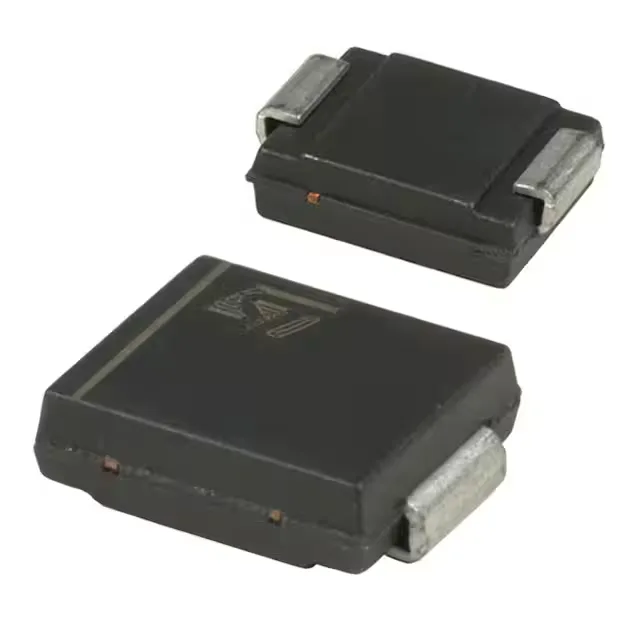
STMicroelectronics SMCJ13CA-TR — Circuit Protection

STMicroelectronics SMCJ13CA-TR TVS Diode

MPNSMCJ13CA-TR
Active

STMicroelectronics SMCJ, TRANSIL™ series, Type Zener, Bidirectional Channels 1, Voltage - Reverse Standoff (Typ) 13V, Voltage - Breakdown (Min) 14.4V, Voltage - Clamping (Max) @ Ipp 27.2V, Power - Peak Pulse 1500W (1.5kW), Current - Peak Pulse (10/1000µs) 368A (8/20µs), Package / Case DO-214AB, SMC, Surface Mount, Operating Temperature -55°C~150°C(TJ).

$0.8100Ref. price · indicative, final on quote
Independent supplier — new & surplus stockAuthenticity-screened · ESD-safe packingListing updated Aug 2026

Specifications

SMCJ13CA-TR specifications
ParameterValue
TypeZener
SeriesSMCJ, TRANSIL™
MountingSurface Mount
Voltage - breakdown14.4V
Voltage - clamping (Max) @ ipp27.2V
Voltage - reverse standoff13V
Current - peak pulse (10/1000μs)368A (8/20µs)
Power - peak pulse1500W (1.5kW)
Power line protectionNo
Operating temperature-55°C~150°C(TJ)
PackageTape & Reel (TR); Cut Tape (CT)
ApplicationsGeneral Purpose
CaseDO-214AB, SMC
Bidirectional channels1

Product details

1500 W bidirectional TVS for a 13 V rail

Its single bidirectional channel handles both positive and negative surges, so one device covers a signal or power line without polarity concerns. Peak pulse power is rated at 1500 W (1.5 kW) under the 10/1000 µs waveform, and the clamping voltage at that power reaches 27.2 V maximum. The corresponding peak pulse current is 368 A under the 8/20 µs waveform, which is the more common surge test for telecom and industrial interfaces. The reverse standoff voltage of 13 V means the device draws negligible leakage below that level, and breakdown starts at a minimum of 14.4 V.

The part is rated for general-purpose applications per the listing, which in practice means power-supply input protection, telecom line cards, industrial I/O modules, and automotive auxiliary rails where a 13 V standoff fits.

Frequently asked questions

Is SMCJ13CA-TR bidirectional or unidirectional?

SMCJ13CA-TR is a single bidirectional channel device — it clamps both positive and negative transients on the same line.