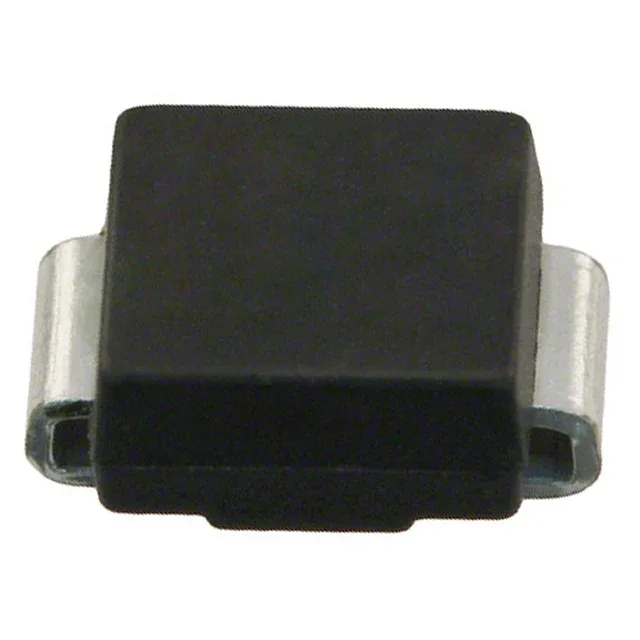
600 W bidirectional TVS in a DO-214AA package
It delivers 600 W peak pulse power per the 10/1000 µs waveform, with a breakdown voltage window starting at 26.7 V and a maximum clamping voltage of 38.9 V at the rated 16 A peak pulse current. The DO-214AA (SMB) surface-mount package suits automated assembly for general-purpose protection on power, signal, or data lines where the circuit sees symmetrical clamping needs.
24 V rail protection — the clamping window matters
A 24 V reverse standoff voltage means this part conducts negligible leakage below that level; the rail sits safely under the standoff during normal operation. The 26.7 V minimum breakdown ensures the device starts clamping before the protected circuitry sees damage, while the 38.9 V clamp at 16 A limits the let-through voltage during a surge event. For a 24 V DC bus or a 24 VAC signal line, these three numbers define the protection corridor the designer budgets against.
Bidirectional — one device for symmetrical clamping
This eliminates the need for two unidirectional diodes back-to-back on AC signal lines or on DC rails where reverse-polarity events are possible. The part is marked as having no power line protection (it is not designed for sustained overvoltage or continuous fault conditions), so it fits best on auxiliary power inputs, I/O lines, or communication ports where the threat is a transient spike, not a sustained rail fault.
This gives design engineers and procurement teams confidence for new BOM entries and ongoing production builds.