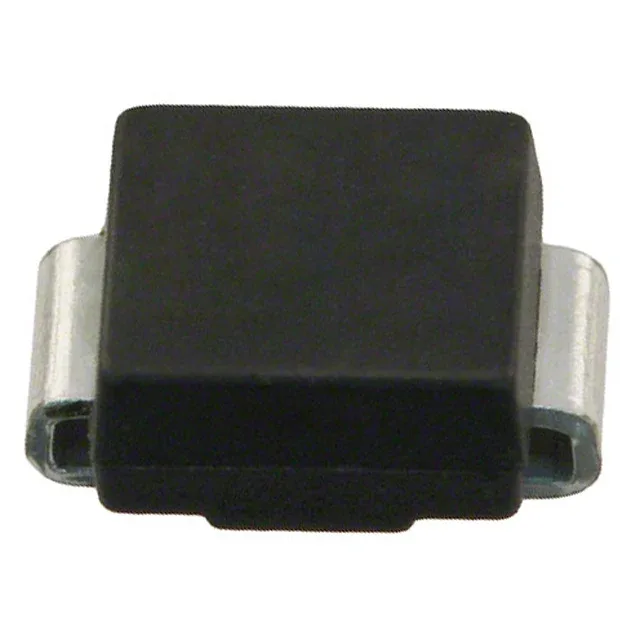
Rated for 600W peak pulse power (10/1000 µs waveform), it can absorb substantial transient energy while clamping to a maximum of 121V at 33A (8/20 µs). The 58.1V standoff voltage means it will not conduct at normal operating levels on a 48V nominal rail, and the 64.6V minimum breakdown ensures the avalanche region is entered only during an overvoltage event.
For an 8/20 µs waveform, the peak current capability is 33A. This translates to a clamping voltage of 121V at that current, which is the maximum voltage the protected circuitry will see during the surge. For a 48V automotive bus, this provides a comfortable margin above the normal operating range while keeping the clamp below typical semiconductor breakdown thresholds. The 64.6V minimum breakdown voltage ensures the device starts clamping before the voltage reaches a destructive level. This window — from 58.1V to 64.6V — defines the protection threshold and must be matched to the nominal rail voltage plus any steady-state tolerance.
This is a standard, non-obsolete part that can be sourced through authorized distribution channels.