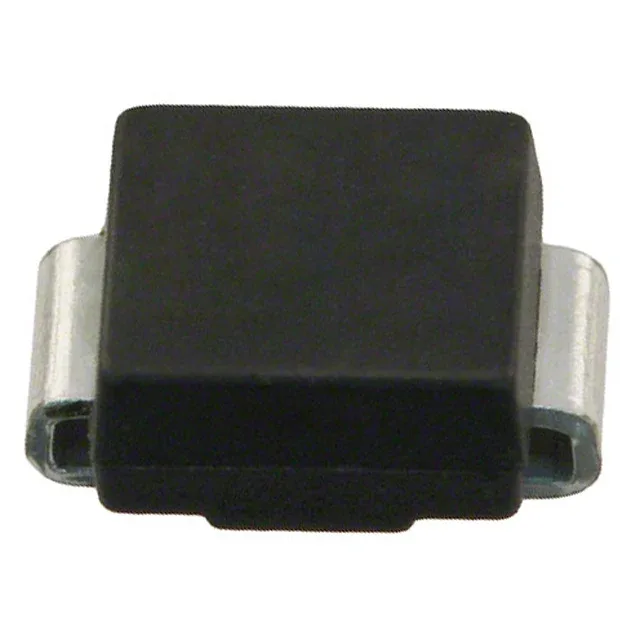
STMicroelectronics SM6T56CAY — Circuit Protection

STMicroelectronics SM6T56CAY TVS Diode, 600W Bidirectional

MPNSM6T56CAY
Active

STMicroelectronics SM6T56CAY, TRANSIL™ series, Zener TVS diode, bidirectional, 600W peak pulse power, 47.6V reverse standoff, 53.2V min breakdown, 100V clamping, DO-214AA SMB, AEC-Q101 automotive qualified.

$0.7400Ref. price · indicative, final on quote
Independent supplier — new & surplus stockAuthenticity-screened · ESD-safe packingListing updated Aug 2026

Specifications

SM6T56CAY specifications
ParameterValue
TypeZener
SeriesAutomotive, AEC-Q101, SM6TY, TRANSIL™
MountingSurface Mount
Voltage - breakdown53.2V
Voltage - clamping (Max) @ ipp100V
Voltage - reverse standoff47.6V
Current - peak pulse (10/1000μs)40A (8/20µs)
Power - peak pulse600W
Power line protectionNo
Operating temperature-55°C~150°C(TJ)
PackageTape & Reel (TR); Cut Tape (CT)
ApplicationsAutomotive
CaseDO-214AA, SMB
Bidirectional channels1

Product details

600W bidirectional TVS for automotive rails

With a reverse standoff voltage of 47.6V and a minimum breakdown voltage of 53.2V, this bidirectional device clamps transients to a maximum of 100V at the peak pulse current of 40A (8/20µs waveform). The single bidirectional channel protects against both positive and negative surges on a single line.

AEC-Q101 and the operating envelope

Clamping voltage and rail selection

The 47.6V reverse standoff is the maximum DC voltage the TVS will not conduct at — it sits comfortably above a 24V nominal automotive rail (which can transient to 36V during load dump) but is too high for a 12V system (typically 13.8V nominal, with transients to 26V). For 12V rails, a lower-voltage TVS in the same family would be the correct fit. This must stay below the absolute maximum rating of the downstream ICs — a 60V-rated MOSFET would be at risk, while a 100V-rated device has margin.

On the rework bench, it is straightforward to remove with hot air and replace without lifting pads — the body is large enough to grip with tweezers, and the two terminals are clearly marked for polarity (though bidirectional means no orientation concern).

Frequently asked questions

Can SM6T56CAY be used for 24V automotive systems?

Yes, the 47.6V reverse standoff voltage is well above the 24V nominal rail and handles load-dump transients up to 36V without conducting. The 100V clamping voltage provides adequate protection for downstream components rated above 100V. For 12V systems, a lower-voltage TVS in the same family would be needed.

What is the difference between SM6T56CAY and SM6T56A?

The SM6T56CAY is a bidirectional device (single channel protects both polarities), while the SM6T56A is the unidirectional version. Both share the same 600W peak pulse power, 47.6V standoff, and DO-214AA package. Choose the CAY suffix for AC-coupled or differential signal lines where polarity is not fixed.