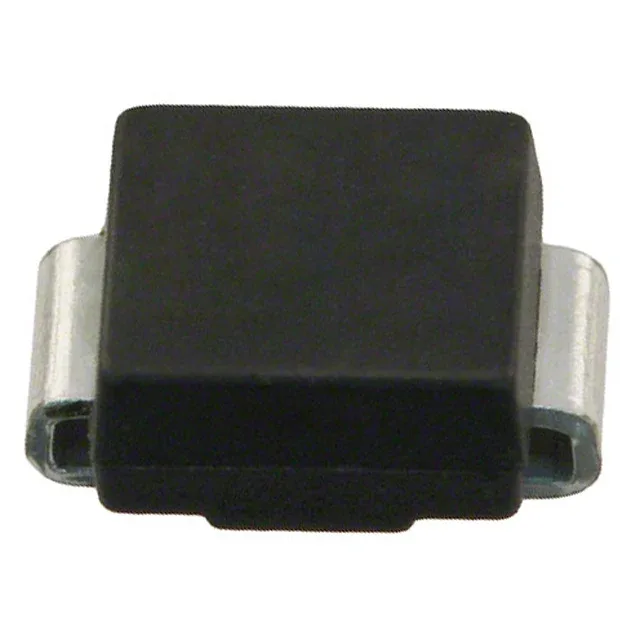
It is qualified to AEC-Q101, making it suitable for automotive electronic control units, battery management systems, and any 24V or 30V nominal rail that must survive load-dump or inductive kickback events.
Voltage ratings — the protection window
The reverse standoff voltage of 30.8V means the diode does not conduct appreciably below that level, so a 24V or 28V rail sees negligible leakage. Breakdown occurs at a minimum of 34.2V, and the clamping voltage at peak pulse current is 64.3V. That 64.3V ceiling is what the downstream circuitry must survive — if the protected device has a 60V absolute maximum, this part leaves only 4.3V of margin, so verify the load's voltage tolerance against the clamping spec.
Surge current and waveform context
The peak pulse current is listed as 62A for an 8/20µs waveform, which is the standard IEC 61000-4-5 surge shape. For the longer 10/1000µs telecom waveform the peak current will be lower — the 600W rating is the energy envelope. When sizing the TVS for a specific transient test, match the waveform to the datasheet's derating curves.
No power line protection feature is built in — this is a basic TVS, not a combination protector.