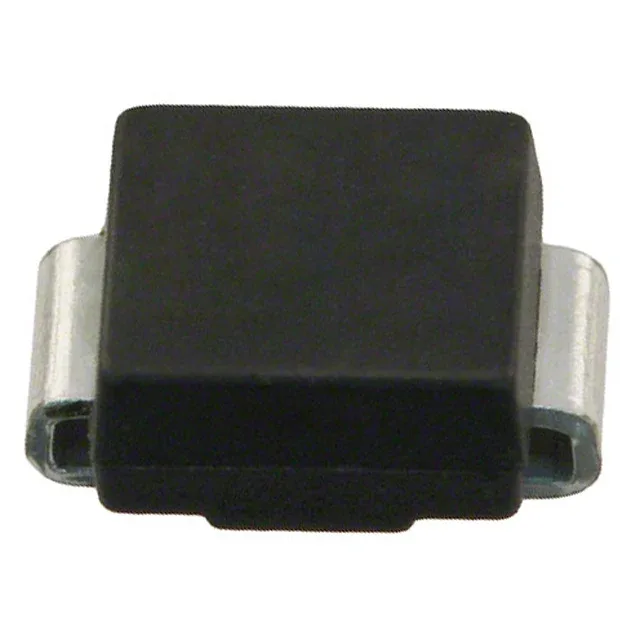
What this TVS is and why the AEC-Q101 matters
The STMicroelectronics SM6T33CAY is a bidirectional Zener-type transient voltage suppressor in the TRANSIL™ family, purpose-built for automotive electronics. It's the 'Y' suffix variant — that means AEC-Q101 qualification, so it's screened for the thermal and reliability demands of under-hood and chassis-mounted modules. The base SM6T33CA (without the Y) is the commercial-grade sibling; if your BOM calls for the automotive line, the SM6T33CAY is the one that carries the certification trace.
28.2V standoff — yes, it protects a 24V automotive rail
The reverse standoff voltage is 28.2V typical. That's the voltage the part can sit across all day without conducting leakage current. For a nominal 24V automotive system — which can ride up to 28V during alternator regulation or load dump — this TVS stays out of the way until it's needed. Breakdown starts at 31.4V minimum, so there's a clean 3V+ margin above the standoff before the device begins to clamp.
When the surge hits, the SM6T33CAY clamps at 59V maximum at the rated peak pulse current of 68A (8/20µs waveform). That 59V ceiling is what the downstream regulator, MCU, or transceiver sees across its supply rails. If your protected circuit's absolute maximum rating is, say, 60V, you're right at the edge — you'll want to check the transient immunity of the load.
Bidirectional — no orientation guesswork in the field
This is a single-channel bidirectional device. That means it clamps equally on positive and negative transients, and — critically for a field swap — you can't install it backwards. On a DO-214AA (SMB) package, the cathode band is still present, but the bidirectional structure means polarity doesn't matter. If you're replacing a failed TVS on a customer site without a bench, that's one less thing to get wrong.