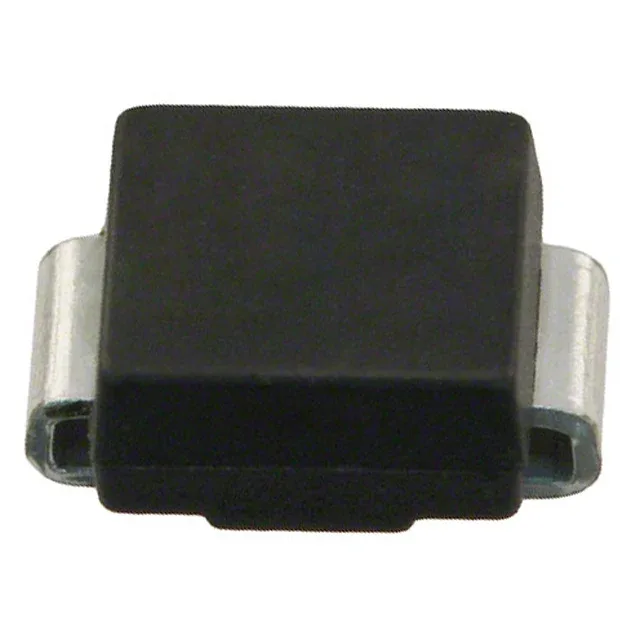
What the 59V clamp means for your 28V rail
The 31.4V minimum breakdown voltage ensures the device stays off during normal operation, while the 59V maximum clamping at the 68A peak pulse current defines the voltage the protected circuitry must survive.
Breakdown tolerance and the design margin
The 31.4V breakdown minimum is the voltage at which the device starts to avalanche. Stack that against the 28.2V reverse standoff — the maximum voltage the TVS will not conduct at all. The 3.2V gap is the guard band for DC tolerance and temperature drift. If your rail is a tightly regulated 24V, this part gives generous margin; if it's a 30V bus with 5% tolerance, you risk the TVS conducting at the high end of the rail, wasting power and potentially overheating. Check the derating curve for junction temperature up to 150°C — breakdown voltage rises with temperature, so the guard band widens in hot environments.
The SMB body is larger than the smaller SMA, so the pad geometry on the PCB must match the SMB land pattern — not the SMA footprint you might have on hand for lower-power parts.
The base product number SM6T33 covers the family; the 'A' suffix indicates a 5% tolerance on breakdown voltage, which is the standard grade.