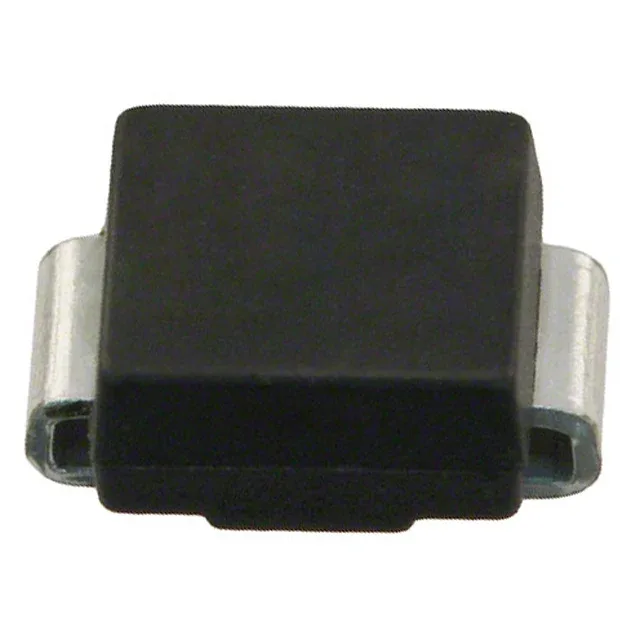
The STMicroelectronics SM6T15CAY is a bidirectional Zener-based transient voltage suppressor (TVS) from the SM6TY series, built on the TRANSIL™ technology. It is AEC-Q101 qualified for automotive applications, meaning it meets the stress and reliability tests required for under-hood and chassis-domain electronics. The clamping voltage is held to 27.2V at the peak pulse current of 147A (8/20µs waveform), which keeps downstream 40V-rated silicon safe.
12V rail protection — the numbers that matter
For a 12V automotive system, the key spec is the reverse standoff voltage of 12.8V — that is the maximum continuous DC voltage the TVS will not conduct at. The breakdown voltage (the point where it starts to avalanche) has a minimum of 14.3V, so it stays out of the way during normal battery voltage (up to ~14V during charging). When a surge hits, the clamping voltage maxes out at 27.2V, which is well below the typical 40V or 60V absolute maximum of most automotive-rated ICs and MOSFETs. The 600W peak pulse power rating (10/1000µs) covers the energy in a standard load-dump pulse per ISO 7637-2 pulse 5a/5b, though a higher-power TVS may be needed for severe load-dump conditions in heavy trucks.
Package and field replacement
It is a standard footprint you will find on many automotive ECU boards. For field service, it is a straightforward hot-air swap — no special orientation gotchas since it is bidirectional (both pins are identical). The package marking should be legible under magnification, but if the board is conformal-coated, plan on cleaning the area first. No lab bench needed; a hot-air station with a fine nozzle and some flux will get it done on site.