Why this TVS diode exists in your BOM
The 26V reverse standoff voltage means it stays out of the way during normal operation, while the 28.9V minimum breakdown ensures the clamping triggers before the protected circuitry sees damaging overvoltage.
Clamping voltage and surge current — what they mean for protection
When the SM4T30CAY sees a transient exceeding the 28.9V breakdown threshold, it conducts and clamps the voltage to a maximum of 53.5V at the rated peak pulse current of 43A (8/20µs waveform). That 53.5V ceiling is the voltage the protected ICs must survive. For a 24V automotive bus, this leaves enough margin for most common 60V-rated downstream parts. The 400W peak pulse power is the energy-handling budget — if your application sees repetitive surges or longer-duration events, derate accordingly.
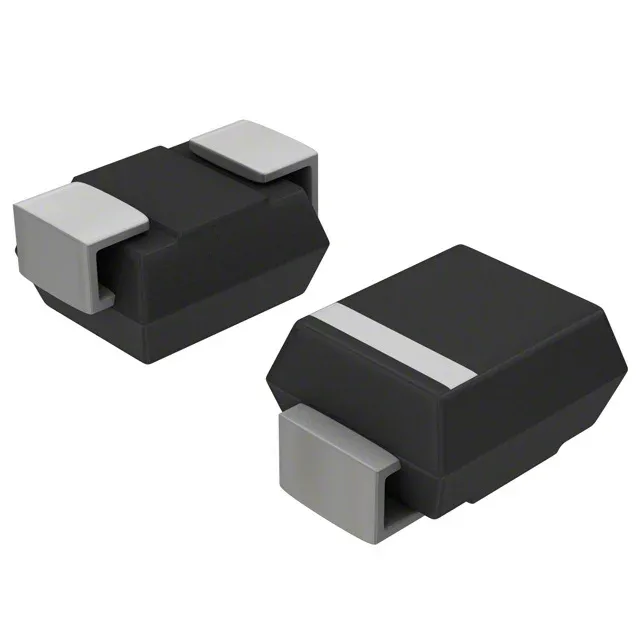
The SM4T30CAY comes in the standard DO-214AC (SMA) package, surface-mount with two terminals. The SMA footprint is widely used and shared across many TVS diodes in this power class, so layout reuse across alternate sources is straightforward.