What this TVS diode protects and where
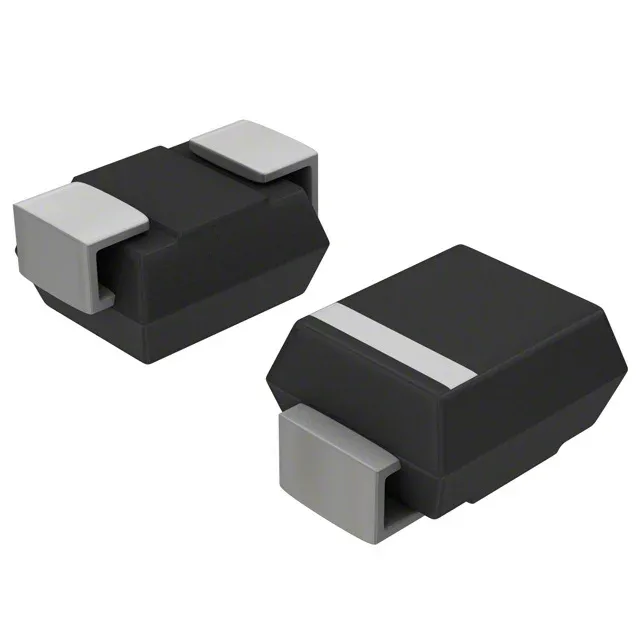
The STMicroelectronics SM4T18CAY is a 400W bidirectional Zener-type transient voltage suppressor (TVS) diode, qualified to AEC-Q101 and built for automotive electrical environments. It clamps transients on 15V nominal rails — the reverse standoff voltage is 15V, breakdown starts at 16.7V, and the clamping voltage holds at 32.5V at the peak pulse current. The single bidirectional channel replaces two unidirectional diodes in series, simplifying the board layout and reducing part count.
AEC-Q101 qualification is the gate for any semiconductor going into a production vehicle. The SM4T18CAY carries that qualification, so it passes the component-level stress tests — temperature cycling, high-temperature reverse bias, humidity, and bond-wire fatigue — that an OEM PPAP package expects. For a buyer sourcing for an automotive ECU, this part lands on the approved list without requalification. The industrial-grade equivalent (SM4T18CA without the Y suffix) lacks that qualification, which means a separate PPAP submission and audit risk if you try to substitute it into a certified BOM.
400W peak pulse — sizing the protection
For a 15V rail in a 12V automotive system — where load-dump and ISO 7637-2 pulses are the threat — 400W provides solid margin for suppressing transients up to 71A (8/20µs waveform). The clamping voltage of 32.5V at that current keeps the protected IC below its absolute-maximum rating in most cases. On a 24V truck rail this part is not the right fit; the breakdown window is too low.
Bidirectional channel — layout and sourcing simplicity
That cuts the component count in half compared to a back-to-back unidirectional pair and frees board area in dense ECU layouts. The SMA footprint is standard across the SM4T series, so a layout designed for the SM4T18CAY can accept other voltage variants in the family with no PCB change.