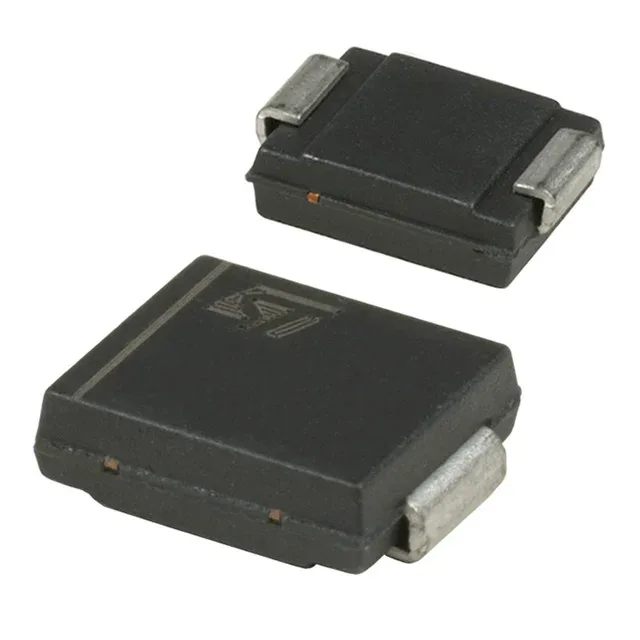
SM15T56AY — automotive-grade 1500W TVS for 48V bus protection
Its 1500W peak pulse power capability (10/1000µs waveform) handles load-dump and inductive-load transients common in 48V vehicle electrical systems, including mild-hybrid and EV auxiliary buses. The 48V reverse standoff voltage sits below the nominal 48V rail, with a minimum breakdown of 53.3V and a maximum clamping voltage of 100V at the rated peak pulse current of 100A (8/20µs). Packaged in the standard DO-214AB (SMC) footprint, it mates with existing high-power TVS land patterns for 1500W-class protection.
Clamping window — what the breakdown and clamp ratings mean for your rail
With a 48V reverse standoff, the SM15T56AY does not conduct at the nominal 48V bus voltage, leaving a margin for steady-state ripple. The 53.3V minimum breakdown ensures the device starts clamping before the rail exceeds the rating of downstream 60V-rated MOSFETs or DC-DC converters. The 100V maximum clamp at 100A (8/20µs) is the hard ceiling — any transient that pushes beyond that risks device failure. For a 48V system, this window (48V standoff → 53.3V breakdown → 100V clamp) is typical for a 1500W-class TVS; the designer should verify that the load's absolute maximum input voltage is above 100V with derating.
AEC-Q101 and the 150°C junction — where this part fits
The AEC-Q101 qualification is the formal gate for automotive tier-one PPAP submissions — this part carries it, not just a 'suitable for automotive' claim. For a 48V automotive transient suppressor, the SM15T56AY is a qualified, production-current choice.