1500W peak pulse power — clamping a 28.2V rail
Its 1500W peak pulse power (10/1000µs waveform) handles the kind of load-dump and inductive-kick transients common on 24V nominal vehicle power buses, where the 28.2V reverse standoff voltage leaves margin for steady-state rail variations without conducting. The 59V maximum clamping at 169A peak pulse current defines the upper voltage the downstream electronics see during a surge — a critical number for selecting DC-DC converters and linear regulators that must survive the event.
At 150°C junction, derate the peak pulse power per the datasheet's thermal impedance curve — the 1500W rating is at 25°C, and available power drops linearly above that. For a 24V truck or heavy-equipment rail, the 28.2V standoff gives about 15% headroom above nominal, which is enough to avoid false triggering from normal ripple while still clamping before the downstream DC-DC's absolute maximum input.
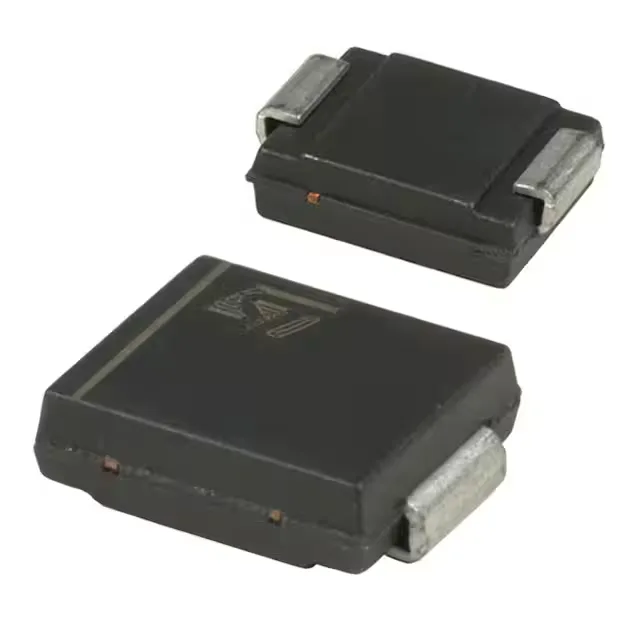
The SMC body handles the 1500W pulse without requiring through-hole leads, which keeps the assembly compatible with reflow soldering. Watch the PCB copper area for thermal dissipation — the pulse rating assumes a minimum pad layout per the datasheet recommendation; a smaller pad reduces the effective power capability.
Sourcing and supply
For BOM qualification, the AEC-Q101 documentation and the TRANSIL™ series reliability report are available to support PPAP submissions.