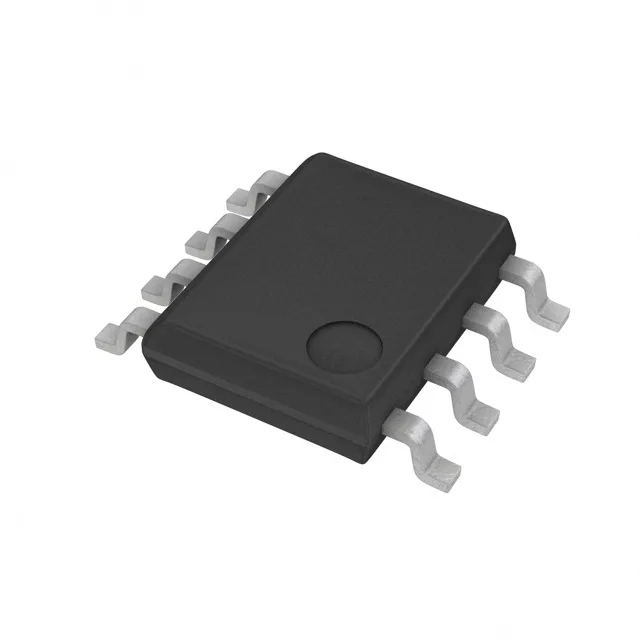
STMicroelectronics OA2NP34S — Analog & Data Acquisition

OA2NP34S CMOS Op-Amp, 9 kHz GBW, 650 nA, Rail-to-Rail

MPNOA2NP34S
End of Life

STMicroelectronics OA2NP34S, dual CMOS rail-to-rail op-amp, 9 kHz gain bandwidth, 650 nA supply per channel, 1.5 V to 5.5 V supply, 8-MiniSO package, -40°C to 85°C.

$2.4Ref. price · indicative, final on quote
Packaging8-TSSOP, 8-MSOP (0.118", 3.00mm Width)
RoHSROHS3 Compliant
Independent supplier — new & surplus stockAuthenticity-screened · ESD-safe packingListing updated Aug 2026

Specifications

OA2NP34S specifications
ParameterValue
Output typeRail-to-Rail
MountingSurface Mount
Amplifier typeCMOS
Voltage - input offset100 µV
Voltage - supply span5.5 V
Current - supply650nA (x2 Channels)
Current - input bias1 pA
Current - output (Channel)11 mA
Operating temperature-40°C ~ 85°C
Gain bandwidth product9 kHz
PackageTape & Reel (TR); Cut Tape (CT)
Slew rate0.003V/µs
Case8-TSSOP, 8-MSOP (0.118\", 3.00mm Width)
Number of circuits2

Product details

Ultra-low-power dual op-amp for battery and sensor conditioning

The STMicroelectronics OA2NP34S is a dual CMOS operational amplifier with rail-to-rail output, designed for applications where supply current is the primary constraint. Each channel draws 650 nA typical, yet delivers a gain-bandwidth product of 9 kHz and an 11 mA output drive per channel.

It is suited for DC or quasi-DC signals: thermocouple conditioning, strain-gauge bridges, photodiode current sensing, and battery voltage monitoring. It cannot track audio or control-loop bandwidths — the TSV912IDT (8 MHz, 4.5 V/µs) is the correct choice for those.

Frequently asked questions

Can OA2NP34S be used in battery-powered applications?

Yes. The 650 nA supply current per channel and 1.5 V minimum supply make it well suited for battery-powered and energy-harvesting sensor nodes, where every microamp matters.

What is the closest functional second-source for OA2NP34S?

The TS942AIDT is a close parametric match: dual CMOS, rail-to-rail output, 10 kHz GBW, 0.0045 V/µs slew rate, 1 pA input bias, and similar supply range. The OA2NP34S has a slightly lower GBW (9 kHz vs 10 kHz) and a lower slew rate (0.003 V/µs vs 0.0045 V/µs), but for ultra-low-frequency sensor conditioning the difference is negligible. Pin compatibility should be verified against the respective datasheets.