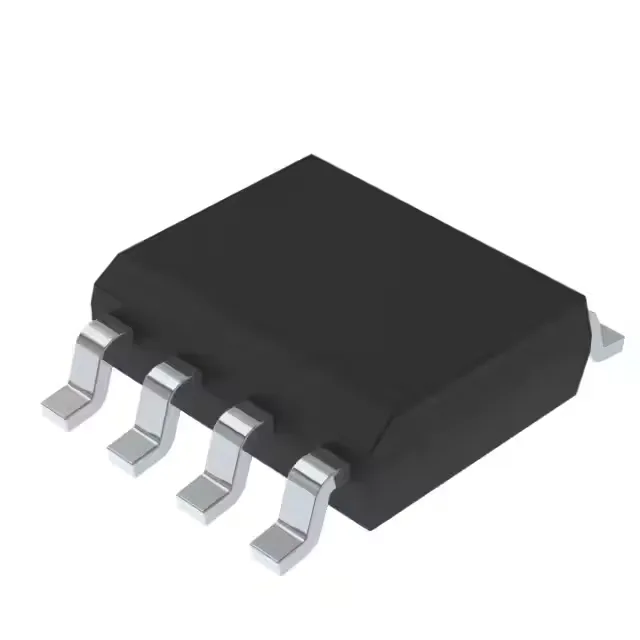
STMicroelectronics MC33078YDT — Analog & Data Acquisition

STMicroelectronics MC33078YDT Dual Op-Amp, 15 MHz, AEC-Q100

MPNMC33078YDT
End of Life

STMicroelectronics MC33078YDT dual general-purpose operational amplifier, 15 MHz gain-bandwidth, 7 V/µs slew rate, 150 µV input offset, 8-SOIC, AEC-Q100 qualified.

$1.78Ref. price · indicative, final on quote
Packaging8-SOIC (0.154", 3.90mm Width)
RoHSROHS3 Compliant
SeriesAutomotive, AEC-Q100
Independent supplier — new & surplus stockAuthenticity-screened · ESD-safe packingListing updated Aug 2026

Specifications

MC33078YDT specifications
ParameterValue
SeriesAutomotive, AEC-Q100
MountingSurface Mount
Amplifier typeGeneral Purpose
Voltage - input offset150 µV
Voltage - supply span30 V
Current - supply4mA
Current - input bias250 nA
Current - output (Channel)37 mA
Operating temperature-40°C ~ 105°C
Gain bandwidth product15 MHz
PackageTape & Reel (TR); Cut Tape (CT)
Slew rate7V/µs
Case8-SOIC (0.154\", 3.90mm Width)
Number of circuits2

Product details

The MC33078YDT is a dual general-purpose op-amp from STMicroelectronics, part of the Automotive AEC-Q100 series.

Automotive temperature grade and supply flexibility

AEC-Q100 qualification means it has passed the reliability stress tests (HTOL, ESD, latch-up, temperature cycling) required for production vehicle programs. The supply span from 5 V to 30 V allows operation from a single 5 V logic rail, a 12 V automotive battery line, or split ±15 V supplies. Quiescent current is 4 mA per amplifier — moderate for a 15 MHz part, but the designer should budget this into the power rail sizing.

Frequently asked questions

What compliance documentation does STMicroelectronics provide for MC33078YDT?

The part is ROHS3 Compliant per the lifecycle record. Standard STMicroelectronics compliance documentation (RoHS, REACH, material declaration) is available through the supply chain.

Will MC33078YDT drop into a board designed for TSH22IDT?

Both parts are dual op-amps in the standard 8-SOIC footprint with the same pinout, so the PCB layout is compatible. However, the TSH22IDT has a 25 MHz GBW and 15 V/µs slew rate versus 15 MHz and 7 V/µs for the MC33078YDT — the speed difference may matter in high-frequency signal paths. The MC33078YDT also draws 4 mA per amplifier versus 2.2 mA for the TSH22IDT, so the power budget should be checked.