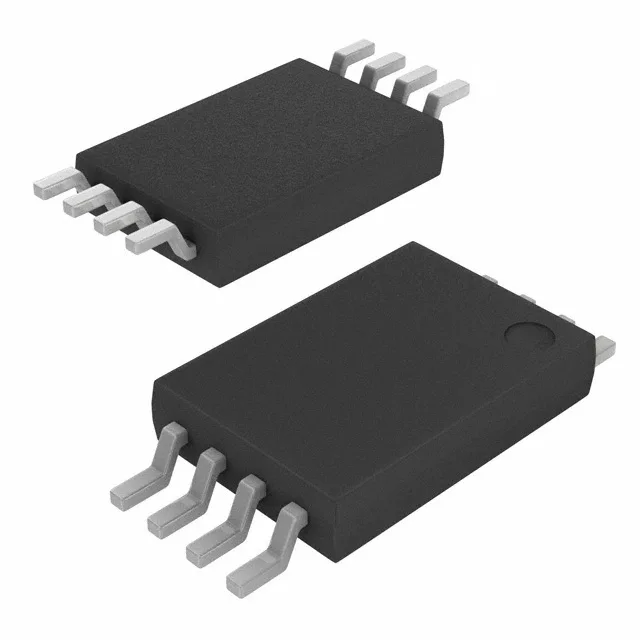
64 Kbit I2C EEPROM — what the specs mean for a replacement search
The STMicroelectronics M24C64-RDW6P is a 64Kbit serial EEPROM with an I2C interface, organized as 8K x 8 bits. It operates from a single 1.8V to 5.5V supply, covering both low-voltage 1.8V logic and legacy 5V rails without a level shifter. The 450 ns access time is typical for an I2C EEPROM at this density; the 1 MHz clock rate sets the maximum bus speed.
Obsolete — sourcing the last lots
The M24C64-RDW6P is marked obsolete by STMicroelectronics. No further factory orders are accepted, and the only available units come from independent distribution or surplus stock. For new designs, look at the active M24C64 family variants.
450 ns access time — timing margin on the bus
At 1 MHz clock (1 µs period), this is a significant fraction of a cycle. In a mixed-speed system with a faster master, the master must insert wait states or stretch the clock to meet this timing. For a drop-in replacement, look for an I2C EEPROM with equal or faster access time at the same supply voltage.
The 1.8V minimum supply is the key spec for low-voltage designs — many 64Kbit I2C EEPROMs require 2.5V or higher. The 5.5V maximum covers 5V ±10% rails. If your design runs on 3.3V, this part sits comfortably in the middle of its range. When sourcing a replacement, confirm the replacement matches the full supply range of your application to avoid a voltage mismatch.
The write cycle time is 5 ms for a single byte (word) or a full page write. This is typical for EEPROMs of this density. If your firmware writes frequently, budget for the write delay — the I2C bus is held busy during the internal write cycle. A replacement with the same or faster write cycle time avoids software timing changes.