64 Kbit I²C EEPROM — the storage you reach for when the MCU's internal flash isn't enough
The STMicroelectronics M24C64-FMN6TP is a 64 Kbit serial EEPROM with an I²C interface running up to 1 MHz, organized as 8K x 8 bits. It's the part you drop onto the bus when you need non-volatile storage for calibration constants, configuration tables, or event logs that survive a power cycle — and the MCU's internal flash is either too small, too slow to write, or endurance-limited. The 1 MHz clock rate puts it in the fast mode plus category, which keeps the bus timing tight enough for most 32-bit MCU I²C peripherals without needing a separate SPI port.
That wide compliance saves a resistor divider or a dedicated I²C level shifter IC.
Access time and write cycle — 450 ns read, 5 ms page write
The 450 ns access time is the random-read latency from the address byte to the first data byte on the SDA line — fast enough that the MCU's I²C peripheral can run back-to-back reads without inserting wait states at 1 MHz. The 5 ms write cycle time per page (the page size is 32 bytes for this density) is the window you need to budget when writing configuration blocks or logging data. If you're doing a firmware update that writes 64 Kbit sequentially, the total write time is roughly 64 Kbit / (32 bytes per page) * 5 ms = about 1.3 seconds, plus overhead.
Temperature grade — industrial, not automotive
It covers factory-floor controllers, outdoor telecom cabinets, and commercial HVAC — but not under-hood automotive or engine-bay environments. If you need the same density and interface at 125°C, the M24C64-DRMN3TP/K (AEC-Q100 qualified) is the automotive sibling, though it uses a 1.8 V supply minimum and a 4 ms write cycle.
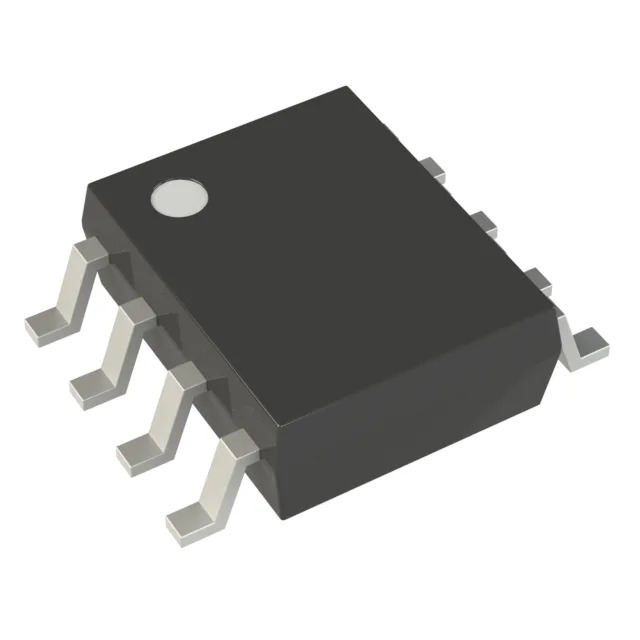
Package — SOIC-8, the reel format matters for storage
The 8-SOIC (3.90 mm width) is the standard narrow-body SOIC footprint — same as a 74HC595 or an AT24C256. If you're stocking reels for a production line, store them dry: SOIC-8 is typically MSL 3, so an opened reel needs a bake before reflow if the humidity indicator card shows exposure. The CT option is handy for prototype quantities or repair stock.
Lifecycle — active, no end-of-life watch needed
ST still manufactures this part, and there's no announced last-time-buy or end-of-life notice.