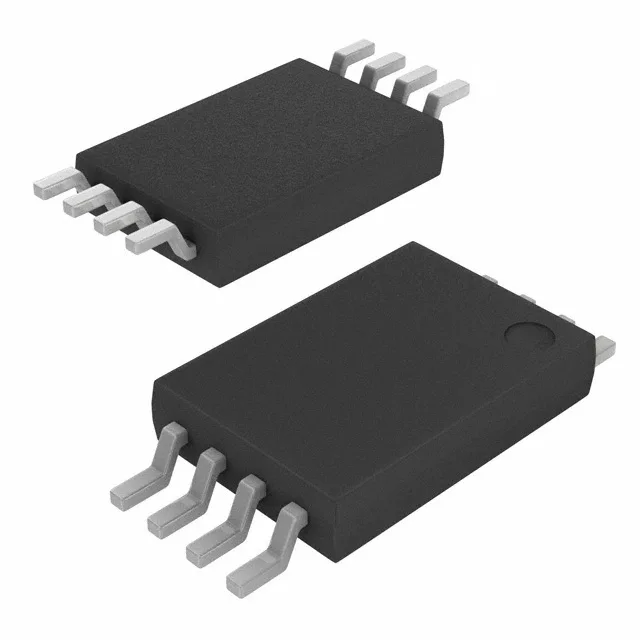
STMicroelectronics M24C02-FDW6TP — Memory (DRAM / SRAM / Flash / EEPROM)

STMicroelectronics M24C02-FDW6TP 2Kbit I2C EEPROM, 8-TSSOP

MPNM24C02-FDW6TP
Active

STMicroelectronics M24C02-FDW6TP, 2Kbit I2C EEPROM, 256 x 8 organization, 900 ns access time, 400 kHz clock, 1.7V to 5.5V supply, -40°C to 85°C, 8-TSSOP package.

$0.1700Ref. price · indicative, final on quote
Packaging8-TSSOP (0.173", 4.40mm Width)
RoHSROHS3 Compliant
Independent supplier — new & surplus stockAuthenticity-screened · ESD-safe packingListing updated Aug 2026

Specifications

M24C02-FDW6TP specifications
ParameterValue
Memory typeNon-Volatile
MountingSurface Mount
Supply voltage1.7V ~ 5.5V
Clock frequency400 kHz
Memory interfaceI²C
Operating temperature-40°C ~ 85°C (TA)
PackageTape & Reel (TR) Cut Tape (CT)
TechnologyEEPROM
Access time900 ns
Memory size2Kbit
Memory formatEEPROM
Case8-TSSOP (0.173\", 4.40mm Width)
Memory organization256 x 8
Write cycle time - word, page5ms

Product details

2Kbit I2C EEPROM in 8-TSSOP — what this part is

The STMicroelectronics M24C02-FDW6TP is a 2Kbit serial EEPROM with an I2C interface, organized as 256 x 8 bits. It is a standard non-volatile memory for storing configuration parameters, calibration data, device IDs, or small firmware patches in embedded systems.

The 1.7V minimum supply means it works directly on a 1.8V microcontroller rail without a regulator — useful for battery-powered or low-power edge nodes.

I2C bus and write cycle

The I2C interface runs at 400 kHz (Fast Mode). Access time is 900 ns, which is well within the I2C timing budget at that speed. Page write operations are supported; the write cycle time per page is 5 ms. For a 2Kbit device organized as 256 bytes, a full chip write in page mode takes roughly 40 ms (8 pages × 5 ms).

Frequently asked questions

Is M24C02-FDW6TP compatible with I2C protocol?

Yes, the M24C02-FDW6TP uses a standard I2C interface running at 400 kHz (Fast Mode). It is compatible with any I2C master operating within the 1.7V to 5.5V supply range.