Automotive-grade dual comparator for 24V and 12V board nets
The STMicroelectronics LM2903WYDT is a dual differential comparator qualified to AEC-Q100, built for the temperature extremes and supply transients found in automotive power trains, body controllers, and battery-management systems. It operates across a 2V to 36V single-supply range or ±1V to ±18V dual supplies, so the same part can sit on a 3.3V logic rail or a 24V truck battery line without a secondary regulator.
Open-collector output and wide logic compatibility
The open-collector output stage pulls down to ground and can be pulled up to any voltage within the supply range, making it compatible with CMOS, TTL, DTL, ECL, and MOS logic families. This matters in mixed-voltage ECU designs where the comparator drives a 5V microcontroller input while the comparator itself runs from 12V.
Extended temperature range and package fit
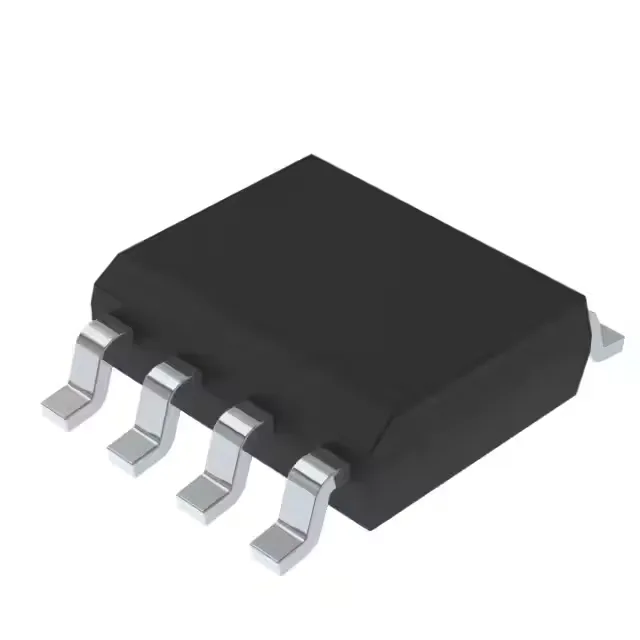
The 8-SOIC package (3.90 mm width) is the same footprint as the industry-standard LM393 and LM2903, so it drops onto existing boards without a layout change.
Input offset and bias — what they mean for threshold accuracy
Maximum input offset voltage is 7 mV at 30 V supply, and maximum input bias current is 0.25 µA at 5 V. For a window comparator monitoring a 12 V battery, a 7 mV offset corresponds to roughly 0.06 % of the threshold — negligible in most automotive sensing loops. The 0.25 µA bias lets you use high-value resistor dividers (100 kΩ range) without pulling the reference voltage off by more than a few millivolts.
Quiescent current and output drive
Maximum quiescent current is 2.5 mA for both comparators — low enough for always-on modules in a body controller. Each output can sink 20 mA typical, enough to drive an optocoupler LED or a small relay coil directly without a buffer transistor.