Why the AEC-Q100 grade matters for your BOM
The LM2903WHYST is the automotive-qualified variant of the industry-standard LM2903 dual differential comparator, carrying AEC-Q100 certification that qualifies it for under-hood and chassis-domain electronics where the base commercial-grade part would not pass reliability screening.
Supply flexibility and output drive
The 2V to 36V single-supply range (or ±1V to ±18V split) lets the same part work on 3.3V logic rails, 5V sensor supplies, or 24V truck battery buses without a local regulator — a BOM simplification for multi-voltage ECUs. Open-collector outputs rated for 20mA sink current interface directly with CMOS, TTL, or ECL logic families; the pull-up resistor choice sets the output high level, so the comparator can level-shift from a 12V sensor rail to a 3.3V microcontroller input without an external translator.
Input precision for sensor thresholds
Maximum input offset voltage of 7mV at 30V supply is tight enough for window comparators in overvoltage/undervoltage detection circuits; the 0.25µA max input bias current at 5V keeps the voltage error below 0.25mV when driving a 1kΩ source impedance. Quiescent current maxes at 2.5mA per package (both channels), so the part adds under 1.25mA per comparator channel to the supply budget — relevant for always-on battery-monitoring circuits where every milliamp counts.
Package and rework perspective
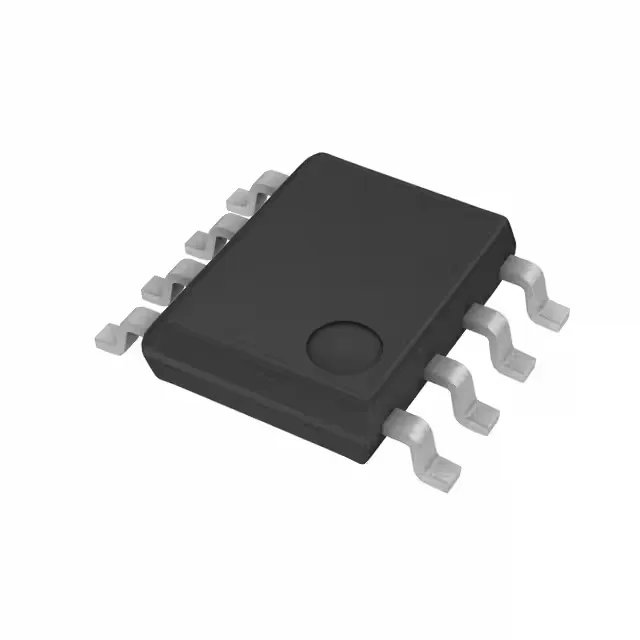
Housed in an 8-MiniSO (MSOP-8, 3.00mm width) package, the LM2903WHYST is a surface-mount part with a small thermal mass — it reflows cleanly with a standard 260°C peak profile and lifts easily under hot air without cooking adjacent components, as long as the pad layout includes a visible pin-1 chamfer.
No official successor or second-source cross-reference is listed; for dual-sourcing resilience, the base LM2903 in a compatible package (e.g., SOIC-8) is a functional drop-in but lacks the AEC-Q100 qualification and extended temperature range.