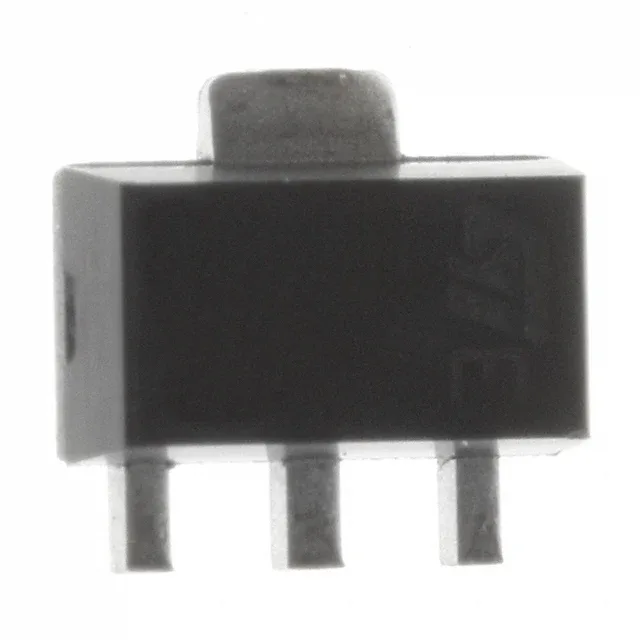
STMicroelectronics LD2981CU50TR — Power Management (PMIC / Gate Driver)

STMicroelectronics LD2981CU50TR LDO Regulator, 5V Fixed

MPNLD2981CU50TR
End of Life

STMicroelectronics LD2981CU50TR LDO voltage regulator, fixed 5V output, 100mA, 63dB PSRR at 1kHz, SOT-89-3 surface mount, -40°C to 125°C.

$0.96Ref. price · indicative, final on quote
PackagingTO-243AA
RoHSROHS3 Compliant
Independent supplier — new & surplus stockAuthenticity-screened · ESD-safe packingListing updated Aug 2026

Specifications

LD2981CU50TR specifications
ParameterValue
Output typeFixed
MountingSurface Mount
Voltage - input16V
Voltage dropout0.375V @ 100mA
Voltage - output (Min (Fixed))5V
Output current100mA
Current - supply2.6 mA
Current - quiescent150 µA
Operating temperature-40°C ~ 125°C
PSRR63dB (1kHz)
PackageTape & Reel (TR); Cut Tape (CT)
CaseTO-243AA
Protection featuresOver Current, Over Temperature
Number of regulators1
Output configurationPositive

Product details

Fixed 5V rail with 63 dB PSRR — analog supply noise floor

The STMicroelectronics LD2981CU50TR is a fixed-output positive LDO regulator delivering 100 mA at 5 V from a maximum 16 V input rail. The 0.375 V dropout at full load (100 mA) leaves only 375 mV of headroom between the input rail and the regulated 5 V output. A 5 V rail fed from a 5.5 V supply has 125 mV of margin above dropout — fine for a clean bus, but marginal if the input sags under transient load. Budget the dropout into the rail-stack design.

150 µA quiescent — always-on and battery-backed rails

Quiescent current is 150 µA typical, with a maximum supply current of 2.6 mA. For a microcontroller's always-on domain or a real-time clock supply that stays powered when the main rail is off, the 150 µA Iq keeps the battery drain low enough that a 100 mAh coin cell runs the regulator for over 27 days before the quiescent draw alone depletes it. The industrial temperature range (-40°C to 125°C) covers engine-bay electronics, outdoor telecom enclosures, and factory-floor sensor modules. The SOT-89-3 package (TO-243AA) has a large center tab that conducts heat to the board copper — the thermal resistance to ambient depends on the pad area, so a solid copper pour under the tab is the difference between 100 mA continuous and derating at high ambient.

Frequently asked questions

What is LD2981CU50TR's PSRR and why does it matter?

The PSRR is 63 dB at 1 kHz. This means switching ripple at 1 kHz from a buck converter or charge pump is attenuated by a factor of about 1400 before it reaches the load. For an analog supply rail powering an op-amp or ADC, that attenuation keeps the noise floor below the signal chain's resolution limit. The PSRR rolls off at higher frequencies, so upstream filtering ahead of the LDO may still be needed for switching noise above 100 kHz.

Will LD2981CU50TR drop into a board designed for LD2981ABU50TR?

The LD2981ABU50TR is the same 5 V fixed-output LDO in the same SOT-89-3 package with the same 63 dB PSRR and 100 mA rating. The difference is the ABU suffix lacks an enable pin — the CU50TR also omits the enable pin (no Control Features entry). Both are pin-compatible and functionally identical for a fixed-output design. The CU50TR is the standard commercial-grade variant; the ABU50TR is the automotive-grade (AEC-Q100) version. If the board was qualified around the ABU50TR's temperature range and reliability testing, the CU50TR may not carry the same automotive qualification.