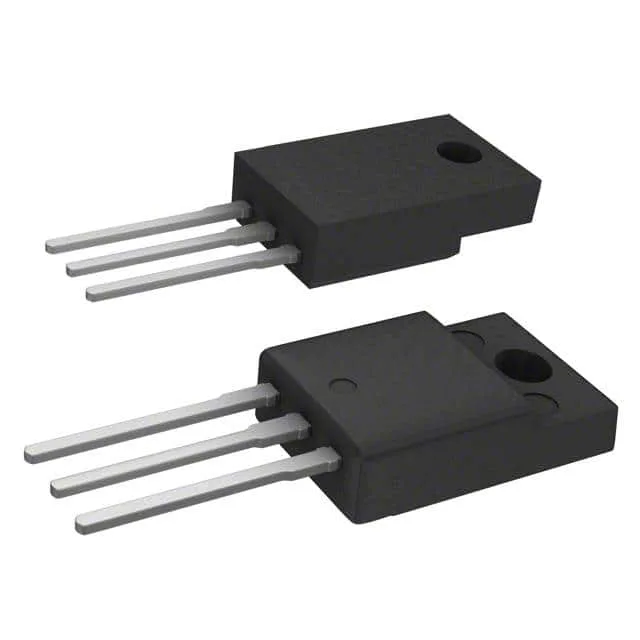
5V rail for the bench or the panel
The STMicroelectronics L7805CP is a classic 5V fixed positive linear regulator in the through-hole TO-220 Full Pack package. It delivers up to 1.5A from an input up to 35V, with a typical 2V dropout at full load — meaning the unregulated input needs to sit above 7V to keep the 5V rail in regulation. The full-pack TO-220FP isolates the tab electrically, so you can bolt it to a chassis or heatsink without a separate insulating washer.
Dropout and input headroom — what the 2V max means for your BOM
The 2V dropout at 1A is the number that decides your transformer or DC-DC front-end voltage. If you need 5V at the output, the input must stay above 7V under load, including line sag and low-line conditions. A 9V wall wart or a 12V rail with a few volts of margin works. Below that, the regulator drops out and the output follows the input down minus the dropout voltage — no regulation. For designs that run from a 5V-only bus, this is not the part; look at an LDO with sub-500 mV dropout instead.
Thermal environment and temperature grade
Rated 0°C to 125°C operating junction temperature — commercial grade, so it fits office equipment, appliances, and indoor industrial panels. Not rated for the engine bay or outdoor telecom cabinets where -40°C ambient is routine. The TO-220FP's full-pack construction helps with thermal management: the metal tab is electrically isolated, so you can mount it directly to a grounded heatsink. At 1.5A output with a 12V input, dissipation runs about 10.5W — that needs a substantial heatsink or forced air. The built-in over-temperature and short-circuit protection will shut it down before damage, but thermal design still needs to keep the junction under 125°C in normal operation.
Protection features and quiescent current
Internal over-temperature and short-circuit protection are included — the regulator folds back current and thermal-cycles if it overheats, so a dead short on the output won't destroy it immediately. Quiescent current is 8 mA typical, which is high by modern LDO standards but normal for a 1.5A three-terminal regulator. That 8 mA flows to ground regardless of load, so in always-on or battery-backed designs it adds up — budget for it in the input power calculation.
This is a mature, widely second-sourced part, so supply is generally stable through standard distribution.