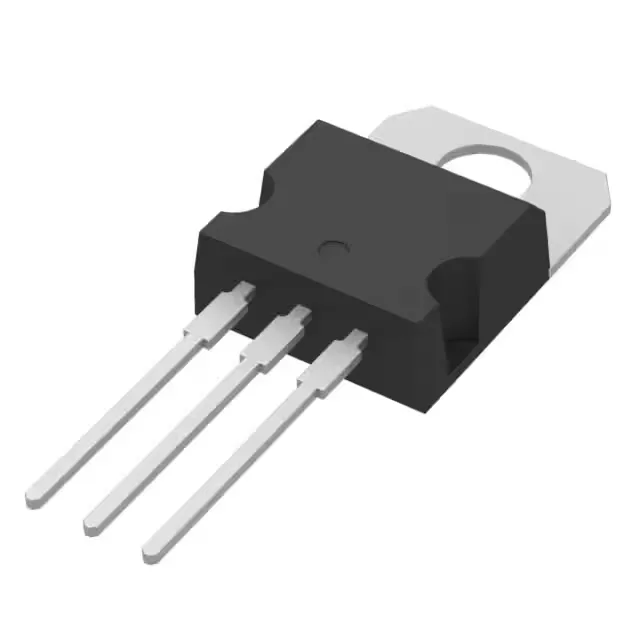
Why the 1.5 A rating matters for your 5 V rail
The L7805ABV delivers a fixed 5 V output at up to 1.5 A continuous — enough to power a small microcontroller board plus a handful of sensors without needing a second regulator. The TO-220 package lets you bolt a heatsink directly to the tab, which is how you actually get that 1.5 A out of it at elevated ambient temperatures. Input voltage can go up to 35 V, so you can feed it from a rectified 24 VAC transformer or a 24 VDC industrial supply without worrying about the dropout headroom. The typical dropout is 2 V at 1 A, meaning the input must stay at least 2 V above 5 V to maintain regulation.
Ripple rejection and protection — what 68 dB PSRR buys you
The 68 dB PSRR at 120 Hz attenuates full-wave rectified ripple by a factor of ~2500 — that is 1 mV of ripple on the output for every 2.5 V of ripple on the input. If your downstream ADC or analog front-end needs a clean 5 V rail, this part saves you a post-filter LC stage. Built-in over-temperature and short-circuit protection mean the regulator folds back current and shuts down before the die cracks — no external crowbar or fuse needed for basic fault handling.
Temperature range and mounting — layout checklist
The TO-220-3 package requires a through-hole footprint; the tab is the output pin (Vout) and also the thermal path. A heatsink with thermal compound is recommended above 1 A at 25°C ambient. Quiescent current is 6 mA typical — that 6 mA flows to ground regardless of load, so factor it into your standby power budget when the load is light.