Buck converter with a wide input range for industrial rails
The L4971D013TR is a step-down (buck) switching regulator from STMicroelectronics, delivering up to 1.5 A continuous output from an 8 V to 55 V input rail — a range that covers standard 12 V, 24 V, and 48 V industrial supplies without a pre-regulator. The output is adjustable from a 3.3 V minimum up to 50 V, which means the same part can produce a 5 V logic rail, a 12 V auxiliary bus, or a 24 V sensor supply from the same incoming voltage.
Switching frequency, package, and what they mean for the layout
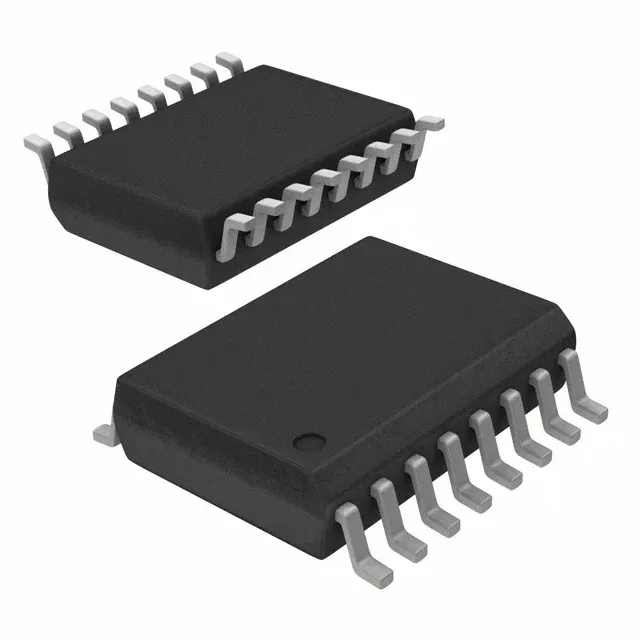
The switching frequency is set between 100 kHz and 300 kHz — low enough to keep switching losses manageable in a 1.5 A buck, but high enough that the inductor and output capacitor stay within a reasonable footprint on a standard PCB. It comes in a 16-SOIC wide-body package (0.295" body width, 7.50 mm) with a surface-mount footprint that mates with standard SOIC-16W land patterns — no custom pad geometry needed. There is no synchronous rectifier on chip, so the design needs an external Schottky catch diode between the switch node and ground — this is typical for non-synchronous bucks in this current class and lets the designer choose the diode's Vf and thermal rating for the specific load.
Temperature range and where it fits in a system
Rated for a junction temperature from -40 °C to +150 °C, this regulator suits enclosures without active cooling — motor drives, industrial control panels, or outdoor telecom gear where the ambient inside the box can climb well above 85 °C. The output is positive and single-channel, so it is a straightforward drop-in for a non-isolated buck stage feeding a local load from a higher-voltage bus.
Production status and compliance
Fully ROHS3 compliant, so it passes the material restrictions for EU and most global markets without an exemption certificate.