100 V, 30 A FERD — the conduction-loss trade-off
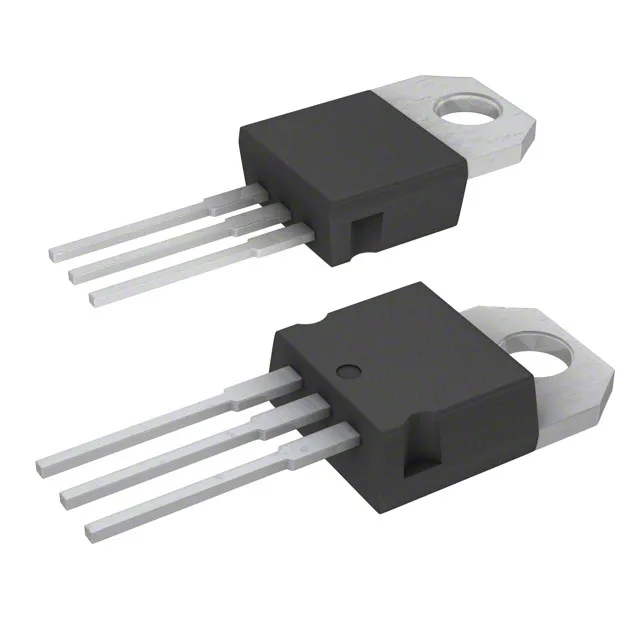
The ST FERD30H100STS is a 100 V, 30 A average-rated Field Effect Rectifier Diode in a TO-220AB through-hole package. ST's FERD (Field Effect Rectifier Diode) technology combines a merged PiN-Schottky structure to deliver a forward voltage of 745 mV at the full 30 A rating — lower than a conventional ultrafast recovery diode at this current, though the 130 µA reverse leakage at 100 V is higher than a standard Schottky's.
Forward drop vs leakage — where the FERD fits
At 30 A the 745 mV forward drop translates to roughly 22 W of conduction loss at full current — a number that drives the heatsink selection. The TO-220AB tab, when bolted to a proper heatsink with thermal compound, keeps the junction-to-case temperature rise manageable. The 130 µA leakage at 100 V adds negligible standby loss in continuous-conduction designs but becomes a factor in high-temperature idle conditions where the leakage doubles with every 10°C rise above 25°C. The Fast Recovery =< 500ns, > 200mA (Io) spec classifies this as a fast-recovery rectifier — not an ultrafast (< 50 ns) part, but fast enough for line-frequency and moderate-frequency switching in the 20-100 kHz range typical of PFC and flyback converters. Above 100 kHz the recovery losses start to dominate; a true ultrafast diode would be a better fit.
Package and mounting checklist
The TO-220-3 (TO-220AB) package has a standard 2.54 mm pin pitch and a metal tab with a 3.7 mm mounting hole for bolt-down heatsinking. The through-hole leads suit wave-solder assembly and manual rework.
ST continues to manufacture the FERD family for the industrial and automotive power markets. For dual-sourcing resilience, a buyer would need to qualify a similar-rated 100 V, 30 A TO-220AB diode from another manufacturer — typically a Schottky or ultrafast recovery diode — against the specific switching frequency and thermal profile of the application.