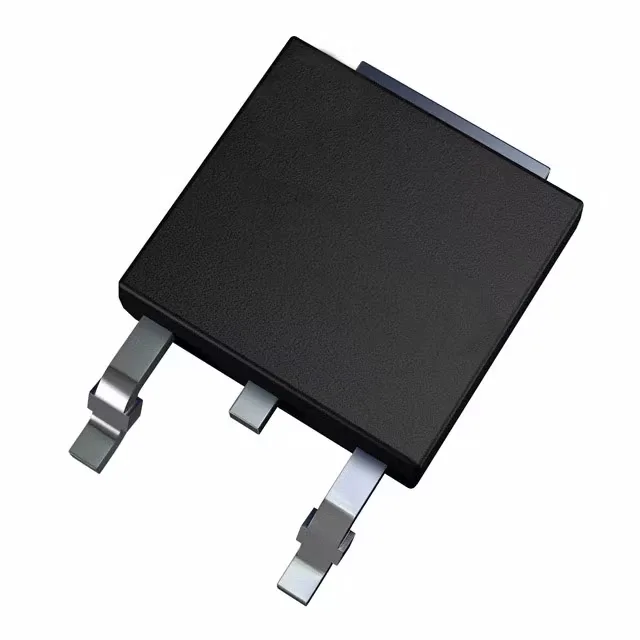
STMicroelectronics FERD20S100SB-TR

ST FERD20S100SB-TR FERD Diode, 100V 20A DPAK

MPNFERD20S100SB-TR
End of Life

STMicroelectronics FERD20S100SB-TR, FERD (Field Effect Rectifier Diode), 100 V reverse, 20 A average rectified, 780 mV forward drop at 10 A, 175 °C junction, DPAK surface mount.

$0.89Ref. price · indicative, final on quote
PackagingTO-252-3, DPak (2 Leads + Tab), SC-63
StockContact for availability
MOQ1 pcs
  • 100% new & originalTraceable channels only — no refurbs, no pulls, no remarked parts.
  • Date & lot codes on quoteStated per line before you commit; label photos on request.
  • MSL-compliant ESD packingMoisture-sealed bags with indicator cards; reels photo-verified.
  • PayPal buyer protectionPay by T/T, PayPal or Payoneer — card payments covered end to end.

Specifications

FERD20S100SB-TR Technical Specifications
ParameterValue
Diode typeFERD (Field Effect Rectifier Diode)
Mounting typeSurface Mount
Voltage - DC reverse (Vr)100 V
Voltage - forward (Vf) (Max) @ if780 mV @ 10 A
Current - reverse leakage @ vr100 µA @ 100 V
Current - average rectified20A
Operating temperature - junction175°C (Max)
SpeedFast Recovery =< 500ns, > 200mA (Io)
PackageTape & Reel (TR); Cut Tape (CT)
CaseTO-252-3, DPak (2 Leads + Tab), SC-63

Product details

20 A in a DPAK — what the current rating tells you

The FERD20S100SB-TR is a 100 V, 20 A average rectified FERD diode from STMicroelectronics in a DPAK (TO-252) package. The 20 A rating is the average rectified current at the case temperature — the actual current you can pull continuously depends on the board copper area under the tab and the airflow. At 20 A the forward drop is 780 mV at 10 A, rising with current and temperature, so the conduction loss budget needs a real thermal calculation, not just the headline number.

FERD vs Schottky — the trade-off that matters

A FERD (Field Effect Rectifier Diode) sits between a standard fast-recovery PN diode and a Schottky. It gives a lower forward voltage than a PN diode — 780 mV at 10 A — but with a higher reverse voltage rating than most Schottkys at this current. The reverse leakage is 100 µA at 100 V, which is higher than a PN diode but lower than a Schottky of the same voltage class. If your design runs hot and the reverse voltage spikes above 60 V, the FERD is the better choice over a Schottky; if you need the absolute lowest Vf at low voltage, a Schottky still wins.

175°C junction — where it fits

The maximum junction temperature is 175°C. That puts it in the industrial/power-supply class — rated for the hot side of a PFC stage, a DC-DC converter output, or a motor-drive rectifier bridge where the ambient inside the enclosure hits 85°C or more. The DPAK tab is the thermal path; the datasheet's thermal resistance figures assume a minimum copper pad area on the PCB. If you are laying out a board for this part, budget a 1-inch-square copper pour under the tab with thermal vias to the inner plane.

The DPAK package is a common footprint, so second-sourcing from other manufacturers with a similar 100 V, 20 A rated diode in TO-252 is straightforward if you need a dual-source hedge.

Frequently asked questions

What is the difference between FERD20S100SB-TR and a Schottky diode?

A FERD (Field Effect Rectifier Diode) offers a forward voltage lower than a standard PN diode but higher than a Schottky — 780 mV at 10 A for this part. The FERD is better suited for applications where reverse voltage exceeds 60 V, where a Schottky would leak too much at high temperature.

Is FERD20S100SB-TR RoHS compliant?

Yes, the FERD20S100SB-TR is ROHS3 compliant.

What is the maximum junction temperature for FERD20S100SB-TR?

The maximum junction temperature is 175°C.