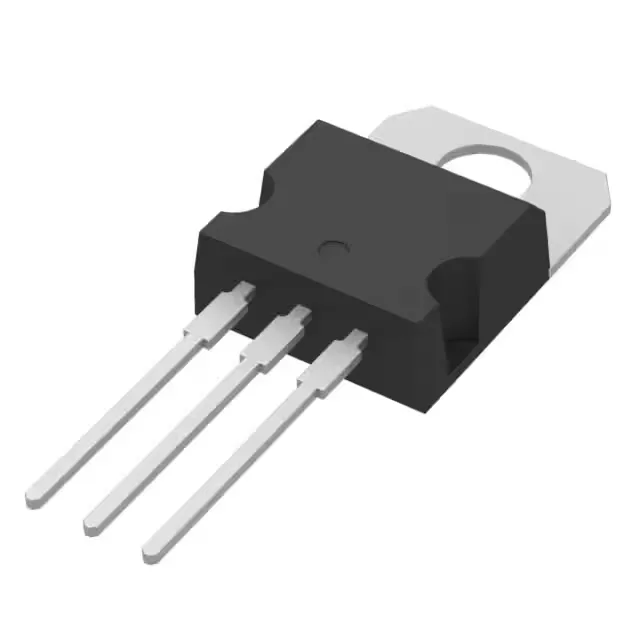
STMicroelectronics BTB16-600BWRG — Discrete Semiconductors

ST BTB16-600BWRG Snubberless Triac, 16 A, 600 V, TO-220

MPNBTB16-600BWRG
Active

STMicroelectronics Snubberless™ series, Triac Type Alternistor - Snubberless, BTB16-600BWRG, 16 A RMS on-state, 600 V off-state, TO-220-3 through-hole, -40°C to 125°C junction temperature.

$1.8800Ref. price · indicative, final on quote
PackagingTO-220-3
RoHSROHS3 Compliant
SeriesSnubberless™
Independent supplier — new & surplus stockAuthenticity-screened · ESD-safe packingListing updated Aug 2026

Specifications

BTB16-600BWRG specifications
ParameterValue
SeriesSnubberless™
Triac typeAlternistor - Snubberless
MountingThrough Hole
Voltage - off state600 V
Voltage - gate trigger (Vgt)1.3 V
Current - hold (Ih)50 mA
Current - gate trigger (Igt)50 mA
Current - on state (It (RMS))16 A
Current - non rep. surge 50, 60Hz160A, 168A
Operating temperature-40°C~125°C(TJ)
PackageTube
ConfigurationSingle
CaseTO-220-3

Product details

16 A Snubberless™ triac — what it is, what it does

The STMicroelectronics BTB16-600BWRG is a Snubberless™ alternistor triac rated for 16 A RMS on-state current and 600 V off-state voltage, housed in a through-hole TO-220-3 package. It switches AC loads like motors, heaters, and lighting without requiring an external RC snubber for many inductive loads, thanks to the Snubberless™ alternistor structure that provides high commutation capability.

Snubberless™ alternistor — why it saves BOM cost

The Snubberless™ alternistor structure is designed for high dV/dt capability, which means it can commutate inductive loads (motors, solenoids, transformers) without the RC snubber that a standard triac would need to prevent false turn-on. That saves one resistor and one capacitor per triac on the BOM, plus the PCB area and assembly cost. For a panel with multiple triac channels, the savings add up. The trade-off is a slightly higher on-state voltage drop compared to a standard triac, but for most 16 A loads the difference is negligible in thermal dissipation.

Mounting and replacement in the field

In a field-service scenario, you can swap it with basic tools — a soldering iron and a screwdriver — no hot-air station needed. The tab is the MT2 terminal, so if you are using a shared heatsink, ensure electrical isolation (mica washer or sil-pad) unless the circuit topology allows a common heatsink.

Frequently asked questions

What is the difference between an alternistor and a standard triac?

An alternistor triac, like the BTB16-600BWRG, has a different internal structure that provides higher dV/dt capability, allowing it to commutate inductive loads without an external snubber. Standard triacs may require an RC snubber to prevent false triggering when switching motors or transformers. The Snubberless™ alternistor eliminates that snubber for many applications.

How to test BTB16-600BWRG?

Use a multimeter in diode-test mode between MT1 and MT2 — you should see an open circuit in both directions (no conduction until gated). To test triggering, apply a positive gate current (50 mA min) between gate and MT1 while the triac is forward-biased; it should latch on and stay on until the load current drops below the 50 mA hold current. A standard triac tester or a simple circuit with a 12 VDC supply, a 100 Ω resistor, and a pushbutton will verify gate triggering and latching.