2SD882

STMicroelectronics

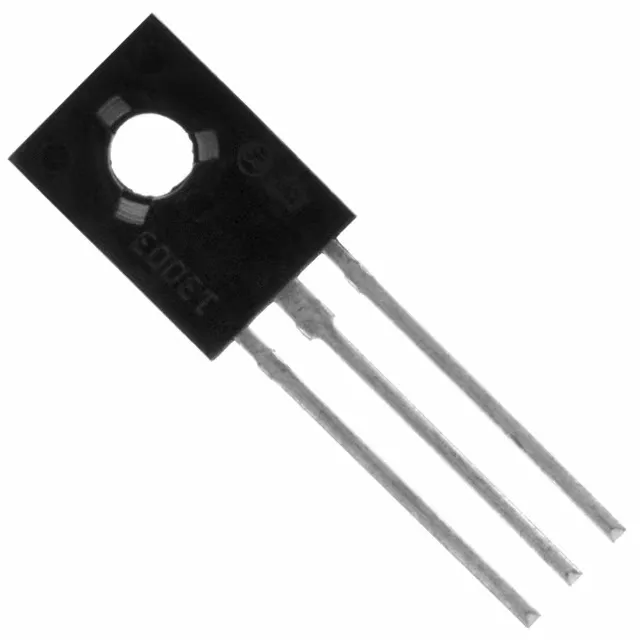
STMicroelectronics 2SD882 NPN transistor, 30 V Vce, 3 A Ic, 12.5 W, TO-225AA / TO-126-3 through-hole, SOT-32, 100 MHz fT, ROHS3 compliant.

STMicroelectronics 2SD882
Download datasheet (PDF)
[IN STOCK] In Stock: 21,245 pcs
$0.08/ pc

Volume pricing

Buy Now

Subtotal:$0.80

MOQ 10 · Tube · RoHS · EIA-481 · DAP/DDP · T/T

Technical specifications

2SD882 specifications
Parameter / AttributeSpecification / Value
MountingThrough Hole
FET typeNPN
Voltage - collector emitter breakdown30 V
Current - collector (Ic)3 A
Current - collector cutoff100µA
DC current gain (hFE) (Min) @ ic, vce100 @ 100mA, 2V
Power - max12.5 W
Frequency - transition100MHz
Operating temperature150°C (TJ)
PackageTube
CaseTO-225AA, TO-126-3
Vce saturation (Max) @ ib, ic1.1V @ 150mA, 3A
100% Footprint Match · Solder-Ready (No PCB Redesign Needed)

Need Stock or a Drop-in Second-Source for 2SD882?

Package: TO-126 · Pin-compatible replacements with immediate Shenzhen spot stock

Footprint Match 98%
Supply Chain & Allocation Reality:

The 2SD882 / 2SB772 pair is the volume medium-power transistor of Chinese production: small audio amplifiers, DC-DC converters, relay and motor drivers, battery products. It is made by ST, UTC and a long list of second-source fabs, and the parts are cheap - which is exactly why two traps dominate: the SMD versions (TO-252 / DPAK) of the same part number carry a different pin order than the TO-126 through-hole body, and the wide gain spread (hFE 60-400) means a blind swap can under-drive or over-drive a stage.

Verified Pin-Compatible Replacements (3 verified alternatives)

BD139 STMicroelectronics / onsemi TO-126
Functional Equivalent
Availability & Target Pricing:

Same Footprint, Voltage Instead of Current

Shenzhen Spot Stock (24-48h Dispatch)

Electrical & Core Specs:

NPN rated 80V / 1.5A where the 2SD882 is 30V / 3A - the mirror-image trade: double the voltage, half the current.

VCEO 80V; IC 1.5A; same TO-126 E-C-B lead arrangement.

Compatibility & Drop-In Notes: The substitution to make when the rail - not the load - is the problem. Above 30V operation the 2SD882 cannot stay in circuit at all, so the BD139 is the direction to go; check the current derating.
Package & Solder Footprint: Identical TO-126 body and E-C-B leads, including the live collector tab.
Shenzhen Warehouse Stock & MOQ: Continuous multi-fab stock; documented gain groups unlike the wide 2SD882 spread.
2SB772 STMicroelectronics / UTC / multiple TO-126
100% Drop-in (Zero Code Change)
Availability & Target Pricing:

The PNP Half, Order Together

Shenzhen Spot Stock (24-48h Dispatch)

Electrical & Core Specs:

The PNP complement: -30V / -3A, same TO-126 E-C-B order. The pair is routinely ordered as a set for push-pull and complementary designs.

VCEO -30V; IC -3A; 10-12.5W class with heatsinking.

Compatibility & Drop-In Notes: Listed because the NPN/PNP mix-up is a constant in repair orders - the two part numbers look alike and the wrong one destroys the stage on power-up.
Package & Solder Footprint: Same TO-126 outline and lead order as the NPN half.
Shenzhen Warehouse Stock & MOQ: Same sourcing discipline: one lot, both polarities, matched quantities.
TIP31C onsemi / STMicroelectronics TO-220
Functional Equivalent
Availability & Target Pricing:

More Dissipation in a Bigger Body

Shenzhen Spot Stock (24-48h Dispatch)

Electrical & Core Specs:

NPN 100V / 3A in TO-220: the upgrade for stages that keep failing hot in TO-126.

VCEO 100V; IC 3A; 40W class with heatsink; lead order B-C-E (not E-C-B).

Compatibility & Drop-In Notes: Mechanical project on an existing board: TO-220 leads are spaced differently and ordered differently. Choose it when the thermal margin is the reason for the repair.
Package & Solder Footprint: Check board area, mounting hardware and insulator kit before promising this swap to a customer.
Shenzhen Warehouse Stock & MOQ: Universal stock; the standard Western thermal upgrade.
Buyer & Quality Checklist for Sourcing Alternatives
  • The pinout trap: the TO-126 through-hole 2SD882 / 2SB772 is E-C-B; the TO-252 (DPAK) and TO-251 surface-mount versions of the same names are B-C-E. Same part number, different lead map - always read the specific vendor drawing before SMD migration or bench substitution.
  • The gain spread is real: hFE 60-400 depending on bin. In driver circuits verify base drive; in audio output stages keep the pair matched (order NPN and PNP from one lot).
  • The collector is the metal tab on the TO-126 body. Insulate when mounting to grounded metal - and remember the TO-252 tab is also the collector on the SMD version.
  • Rated 30V means 30V: on 24V rails the margin is thin and on 36V/48V rails the part is simply out of spec - move up the voltage ladder (BD139 for 80V, TIP31C for 100V).
  • For audio use, compare fT (80-100MHz class on the genuine part) and be aware that the cheap unbranded lots vary; the reproducible sources are the documented ones.
Frequently Asked Technical Questions

Q: What is the SMD equivalent of 2SD882?

A: The same part number sold in TO-252 / DPAK - but note the trap: the SMD body uses a B-C-E lead order where the TO-126 through-hole body is E-C-B. Check the vendor drawing against the land pattern before ordering.

Q: Can BD139 replace 2SD882?

A: Yes when the rail is under 80V - same TO-126 footprint and E-C-B order - but the current ceiling drops from 3A to 1.5A. For higher current at higher voltage, move to TO-220 (TIP31C).

Q: Why do 2SD882 / 2SB772 come as a pair?

A: They are complementary (NPN + PNP) at the same ratings, designed for push-pull drivers, small audio stages and complementary regulators. In those circuits they are replaced together, ideally from the same production lot for gain matching.

Technical details

3 A, 30 V switching envelope for medium-current loads

The 2SD882 is a general-purpose NPN transistor rated for 3 A continuous collector current and a 30 V collector-emitter breakdown — this puts it in the sweet spot for driving relays, solenoids, small DC motors, and linear regulators where the load current stays under 2 A with headroom for inrush. At the full 3 A load, the Vce(sat) is 1.1 V max with 150 mA base drive — that 3.3 W conduction loss at 3 A needs a heatsink on the TO-126 tab; without one the junction hits 150 °C fast and the safe operating area shrinks. The 100 MHz transition frequency means it can handle PWM up to a few hundred kHz in switching applications, though the storage time in saturation will limit the practical switching speed — this is a transistor designed for saturated switching, not RF.

Gain margin and what it means for the base drive

Minimum DC current gain of 100 at 100 mA, 2 Vce means a 30 mA base current saturates a 3 A collector load — that is a forced beta of 100, which leaves the transistor in hard saturation with low Vce(sat). If you drive the base with a microcontroller GPIO through a 1 kΩ resistor from 5 V, the available base current is about 4 mA — that saturates up to 400 mA collector current at the minimum hFE, but at 3 A you need the full 30 mA base drive, so a driver transistor or a Darlington pair is required.

Package and thermal reality

The TO-225AA / TO-126-3 package (SOT-32) is a through-hole tab-mount — the collector is internally connected to the metal tab, so the tab must be electrically isolated from the heatsink or the heatsink must be at the collector potential. Maximum power dissipation is 12.5 W, but that figure assumes the case is held at 25 °C — in still air with no heatsink, the real dissipation is closer to 1–2 W before the junction hits 150 °C.

Lifecycle and compliance

STMicroelectronics lists the 2SD882 as Active — no end-of-life notice, no last-time-buy window. It remains a current-production part suitable for both new designs and repair of existing BOMs. ROHS3 compliant — no restricted substances above the threshold limits, which covers global shipping requirements including EU RoHS and China RoHS.

2SD882
[ALLOC] verified
Quote