ROHM Semiconductor UMH9NTN — Memory (DRAM / SRAM / Flash / EEPROM)

UMH9NTN Dual NPN Pre-Biased Transistor, 50V, 100mA, SOT-363

MPNUMH9NTN
End of Life

ROHM Semiconductor UMH9NTN, Dual NPN Pre-Biased (Digital) Transistor, 50V Vce, 100mA Ic, 250MHz, 150mW, 10kΩ/47kΩ resistor ratio, SOT-363 (UMT6) package, Surface Mount, Tape & Reel.

$0.48Ref. price · indicative, final on quote
Packaging6-TSSOP, SC-88, SOT-363
RoHSROHS3 Compliant
Independent supplier — new & surplus stockAuthenticity-screened · ESD-safe packingListing updated Aug 2026

Specifications

UMH9NTN specifications
ParameterValue
MountingSurface Mount
FET type2 NPN - Pre-Biased (Dual)
Voltage - collector emitter breakdown50V
Current - collector (Ic)100mA
Current - collector cutoff500nA
DC current gain (hFE) (Min) @ ic, vce68 @ 5mA, 5V
Power - max150mW
Frequency - transition250MHz
PackageTape & Reel (TR); Cut Tape (CT)
Case6-TSSOP, SC-88, SOT-363
Resistor - base (R1)10kOhms
Resistor - emitter base (R2)47kOhms
Vce saturation (Max) @ ib, ic300mV @ 250µA, 5mA

Product details

Dual NPN pre-biased — what the integrated resistor network means for your BOM

The ROHM UMH9NTN is a dual NPN pre-biased (digital) transistor in a 6-pin SOT-363 package (UMT6). Each transistor integrates a 10kΩ base resistor (R1) and a 47kΩ emitter-base resistor (R2), so the bias network is already on-chip. That eliminates two external resistors per channel — four components saved versus a discrete transistor pair.

ROHS3 compliant.

SOT-363 footprint — fits tight layouts

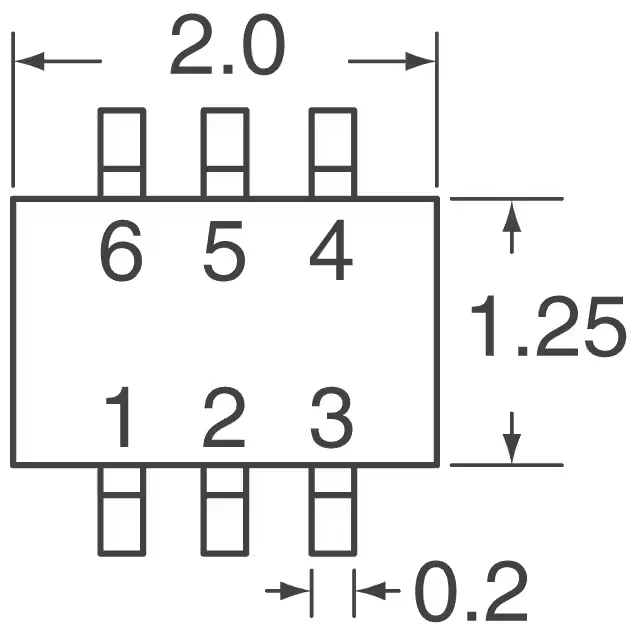
The UMT6 package is a 6-pin SOT-363 variant, roughly 2.0mm × 2.1mm. The compact footprint suits multi-layer PCBs in portable devices, sensor modules, and space-constrained control boards. No special thermal management needed at the 150mW power ceiling in typical ambient conditions.

Frequently asked questions

What is the closest functional alternative — UMH10NTN?

The UMH10NTN is the closest peer: same dual NPN pre-biased topology, same 50V/100mA/250MHz ratings and SOT-363 package, but with a 2.2kΩ base resistor (R1) instead of the UMH9NTN's 10kΩ. The bias current changes with R1, so the two are not drop-in equivalents — the UMH9NTN's 10kΩ/47kΩ ratio gives a higher base-drive threshold, which matters in logic-level interface designs where the input voltage swing is limited.