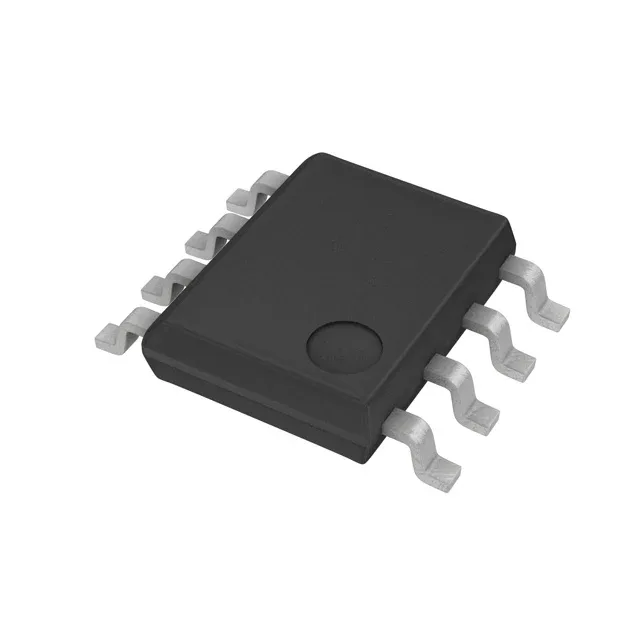
ROHM Semiconductor BR93L86RFJ-WE2 — Microcontrollers & Processors (MCU / MPU / DSP)

BR93L86RFJ-WE2 EEPROM 16Kbit Microwire 2MHz 8-SOIC

MPNBR93L86RFJ-WE2
End of Life

ROHM BR93L86RFJ-WE2, 16Kbit EEPROM, Microwire interface, 2 MHz clock, 1.8V to 5.5V supply, -40°C to 85°C, 8-SOIC (0.154", 3.90mm Width), 8-SOP-J, Tape & Reel.

$0.77Ref. price · indicative, final on quote
Packaging8-SOIC (0.154", 3.90mm Width)
StockContact for availability
MOQ1 pcs
  • 100% new & originalTraceable channels only — no refurbs, no pulls, no remarked parts.
  • Date & lot codes on quoteStated per line before you commit; label photos on request.
  • MSL-compliant ESD packingMoisture-sealed bags with indicator cards; reels photo-verified.
  • PayPal buyer protectionPay by T/T, PayPal or Payoneer — card payments covered end to end.

Specifications

BR93L86RFJ-WE2 Technical Specifications
ParameterValue
Memory typeNon-Volatile
Mounting typeSurface Mount
Voltage1.8V ~ 5.5V
Frequency2 MHz
Memory interfaceMicrowire
Operating temperature-40°C ~ 85°C (TA)
PackageTape & Reel (TR); Cut Tape (CT)
TechnologyEEPROM
Memory size16Kbit
Memory formatEEPROM
Case8-SOIC (0.154\", 3.90mm Width)
Memory organization1K x 16
Write cycle time - word, page5ms

Product details

16Kbit serial EEPROM with a wide supply net

The ROHM BR93L86RFJ-WE2 is a 16Kbit serial EEPROM organized as 1K x 16 bits, accessed through a Microwire (three-wire) interface running at up to 2 MHz. It operates from a single 1.8V to 5.5V supply, covering both legacy 5V logic and modern 3.3V or 1.8V core rails without a level translator.

The 2 MHz clock rate on the Microwire bus translates to a theoretical 2 Mbit/s serial throughput. For a 16-bit word, that is about 125,000 read operations per second, minus protocol overhead. That is fast enough for parameter storage, calibration tables, or firmware patch staging in most MCU-based designs. If your application needs to stream data faster than that — say, logging sensor data at 100 kHz — you will need a parallel or SPI-based memory instead.

Supply range and write-cycle timing

The 1.8V to 5.5V supply range is wide enough to bridge a 3.3V MCU and a 5V legacy sensor bus on the same rail without a secondary regulator. The write cycle time is 5 ms per word or page, which means a full 1K x 16 memory rewrite takes about 5 seconds if you write every word sequentially. That is acceptable for infrequent calibration updates but too slow for real-time data logging. Keep the 5 ms write time in your firmware timing budget — do not poll the part during a write cycle or you risk corrupting the data.

Package and assembly check

The part is also available in Cut Tape for prototyping. The small 8-pin footprint is common and easy to route; no special thermal considerations apply at the rated 85°C ambient.

Frequently asked questions

Can BR93L86RFJ-WE2 operate at 1.8V to 5.5V across all temperature ranges?

No derating is required.

What is the maximum clock frequency and is it Microwire or SPI compatible?

The maximum clock frequency is 2 MHz, and the interface is Microwire — a three-wire serial bus that is not directly SPI-compatible. Your MCU must support Microwire natively or you must bit-bang the protocol on GPIO pins.