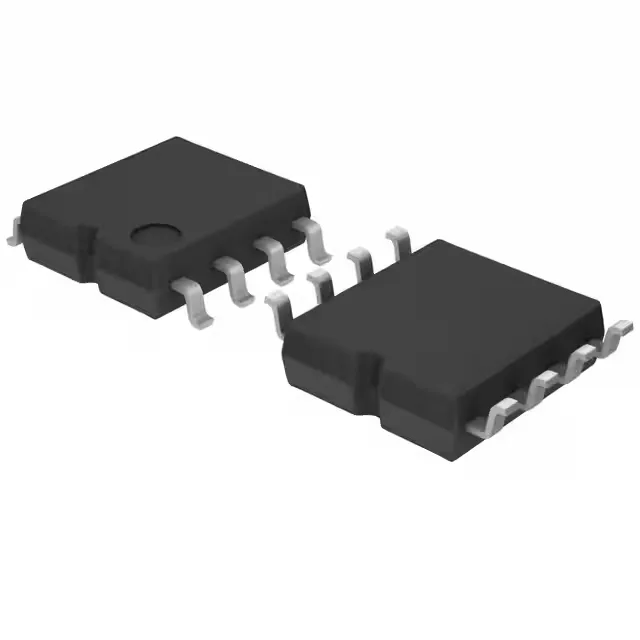
ROHM Semiconductor BR93G56F-3BGTE2 — Microcontrollers & Processors (MCU / MPU / DSP)

BR93G56F-3BGTE2 EEPROM 2Kbit Microwire 3MHz 8-SOP

MPNBR93G56F-3BGTE2
End of Life

ROHM BR93G56F-3BGTE2, 2Kbit serial EEPROM, Microwire interface, 3 MHz clock, 1.7V–5.5V supply, 128 x 16 organization, 5ms write cycle, -40°C to 85°C, 8-SOP package.

$0.62Ref. price · indicative, final on quote
Packaging8-SOIC (0.173", 4.40mm Width)
StockContact for availability
MOQ1 pcs
  • 100% new & originalTraceable channels only — no refurbs, no pulls, no remarked parts.
  • Date & lot codes on quoteStated per line before you commit; label photos on request.
  • MSL-compliant ESD packingMoisture-sealed bags with indicator cards; reels photo-verified.
  • PayPal buyer protectionPay by T/T, PayPal or Payoneer — card payments covered end to end.

Specifications

BR93G56F-3BGTE2 Technical Specifications
ParameterValue
Memory typeNon-Volatile
Mounting typeSurface Mount
Voltage1.7V ~ 5.5V
Frequency3 MHz
Memory interfaceMicrowire
Operating temperature-40°C ~ 85°C (TA)
PackageTape & Reel (TR); Cut Tape (CT)
TechnologyEEPROM
Memory size2Kbit
Memory formatEEPROM
Case8-SOIC (0.173\", 4.40mm Width)
Memory organization128 x 16
Write cycle time - word, page5ms

Product details

2Kbit serial EEPROM with Microwire — calibration and parameter storage

The ROHM BR93G56F-3BGTE2 is a 2Kbit serial EEPROM organized as 128 x 16 bits, accessed through a Microwire (3-wire) interface at up to 3 MHz. It stores configuration parameters, calibration constants, or small lookup tables in a non-volatile memory that retains data without power. The wide supply range from 1.7V to 5.5V lets it operate on a 1.8V, 3.3V, or 5V rail without a separate level translator, simplifying the power architecture on mixed-voltage boards. Write endurance and data retention are typical for a serial EEPROM — the 5ms write cycle time per word or page means the host must wait for the write-complete polling or a timed delay before the next access.

3 MHz Microwire — bus timing and throughput

The 3 MHz clock rate on the Microwire bus gives a raw bit time of 333 ns. For a 16-bit read or write command plus data, the total transfer takes roughly 5–6 µs before the 5ms write cycle begins. That write cycle is the throughput bottleneck — the interface speed matters more for read-back or status polling than for bulk writes. At 3 MHz the bus timing is compatible with most SPI-capable microcontrollers running at 8 MHz or higher, though the Microwire protocol (start bit, opcode, address, data) differs slightly from standard SPI. Check the host's SPI peripheral for Microwire mode support or bit-bang the sequence on GPIOs.

The 1.7V minimum supply ensures operation during battery discharge or brownout conditions in portable equipment. The 5.5V maximum allows direct connection to legacy 5V logic without a regulator on the memory rail.

ROHM lists the BR93G56F-3BGTE2 as Active (current production). The part is ROHS3 compliant.

Frequently asked questions

Is BR93G56F-3BGTE2 compatible with 1.8V systems?

Yes. The supply voltage range of 1.7V to 5.5V covers 1.8V logic directly, so the EEPROM can be powered from a 1.8V rail without a level shifter on the Microwire bus.

What is the equivalent of BR93G56F-3BGTE2?

A lower-density sibling is the BR93G46FVM-3AGTTR (1Kbit, 64 x 16, same 3 MHz Microwire and 1.7V–5.5V supply). For a higher-density option, the BR93H86RF-WCE2 offers 16Kbit but runs at 1.25 MHz and requires 2.7V minimum. Neither is a drop-in replacement — the density and package differ.