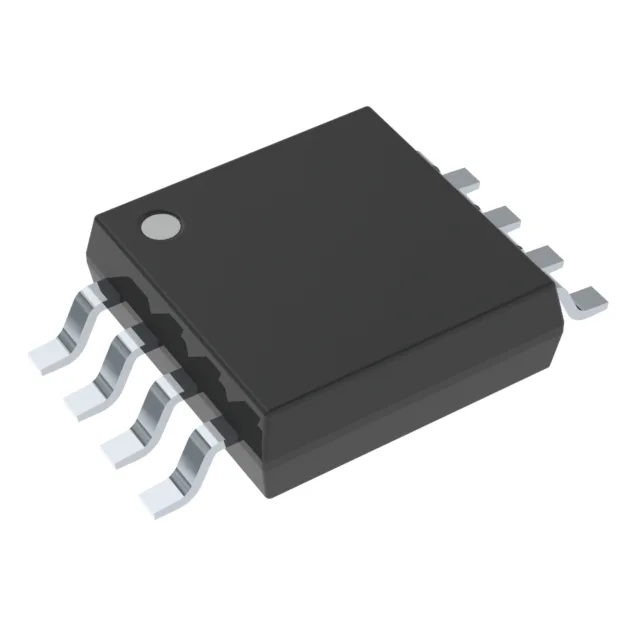
4Kbit SPI EEPROM for under-hood duty
It stores 512 x 8 bits of non-volatile data and clocks up to 10 MHz on the SPI bus. The supply range spans 2.5V to 5.5V, so it runs on either a 3.3V or 5V automotive rail without an extra regulator.
AEC-Q100 grade and what it buys you
The AEC-Q100 stamp means this part passed the stress tests automotive modules need: extended temperature cycling, high-temperature operating life, and ESD robustness. For a sourcing decision, it removes the qualification risk — you can drop this into a production ECU BOM without running your own reliability campaign. The series is explicitly Automotive, AEC-Q100, so the qualification is on the datasheet, not inferred from the temp range alone.
10 MHz SPI and 4ms page write
The 10 MHz SPI clock is fast enough to read calibration tables or fault logs without stalling the main microcontroller. Write cycle time is 4ms per word or page — typical for this density, and predictable enough to budget in a firmware state machine. The 4Kbit density (512 x 8) suits parameter storage: VIN, serial numbers, trim coefficients, and diagnostic trouble codes. It is not a code store; treat it as the non-volatile scratchpad for the ECU's configuration.
For procurement, this means no urgency to qualify an alternate — but as with any active part, confirming availability at quote time is standard practice. The part is RoHS3 compliant.