What the 570 kHz switching frequency means for your board
The BD9E104FJ-E2: The BD9E104FJ- is a 1 A rated step-down (buck) converter from ROHM, switching at 570 kHz. That switching rate sits above the audible band and lets you use a physically smaller inductor than a 100 kHz part would — typically a 10-22 µH shielded ferrite core in the 4x4 mm footprint range. The trade-off is slightly higher switching losses in the internal FETs, but the synchronous rectifier recovers some of that by replacing the freewheeling diode drop with a low-Rds(on) FET. The adjustable output goes from 1 V up to 13 V, set by an external resistor divider. That 1 V minimum floor means it can power a 1.2 V or 1.0 V core rail if the feedback divider is trimmed correctly — useful for a mixed-voltage board where one regulator handles both the 3.3 V I/O and a sub-1.5 V logic rail.
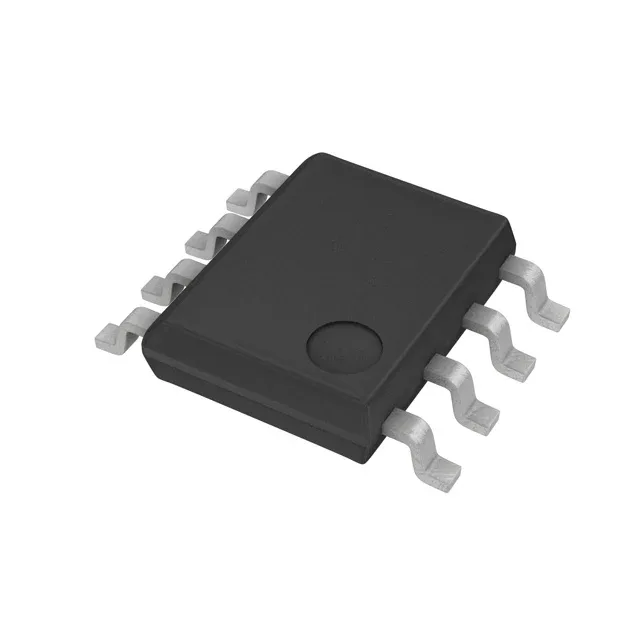
Package and board-fit — the 8-SOP-J footprint
The SOP-J variant has a narrower lead form than standard SOIC — the exposed pad on the bottom side (if present) is the thermal slug. The datasheet's recommended land pattern should be followed for the pad dimensions; the thermal via array under the pad is what pulls heat from the die into the board copper. Without adequate thermal vias, the 1 A output at high input-output differential will push the junction temperature above the 85 °C ambient ceiling.
Active production and compliance posture
ROHM lists the BD9E104FJ- as Active. The part is ROHS3 compliant. For a BOM that needs a 1 A adjustable buck in an 8-pin SOIC footprint, this part is a current-production choice — no last-time-buy risk at this writing.