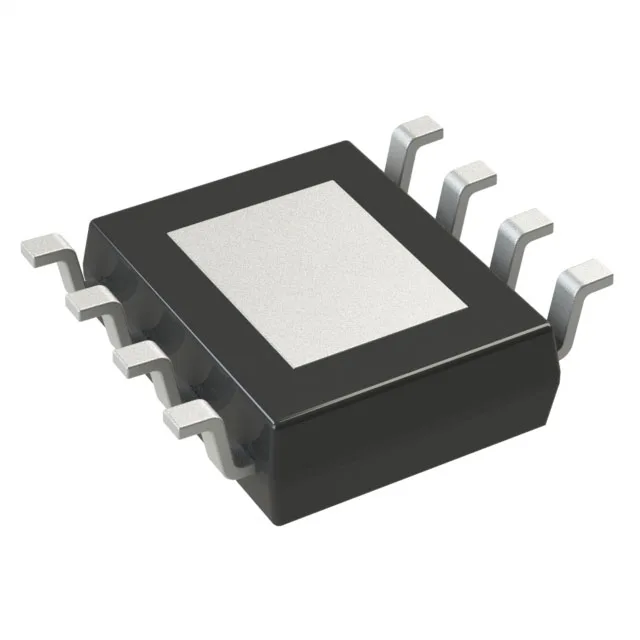
The BD820F50EFJ-CE2 is a single-output positive LDO from Rohm's automotive-grade series, delivering a fixed 5 V at up to 200 mA. The 45 V maximum input voltage lets it sit directly on a 12 V automotive battery bus without a pre-regulator — it shrugs off load-dump transients that would pop a 30 V part. Output is fixed at 5 V (no external divider needed), and the enable pin lets an ECU supervisor gate the rail on key-on.
PSRR and quiescent — the two numbers that matter for the BOM
PSRR is 70 dB at 120 Hz — that is the ripple rejection you get from the alternator's rectified output or a DC-DC stage. At 70 dB the output ripple from a 1 Vpp input drops to about 0.3 mVpp, which keeps sensitive analog loads (sensor bias, ADC reference) clean. The 5 µA quiescent current is the key-off draw: in an always-on ECU module, that Iq adds just 0.12 mAh per day to the vehicle's dark-current budget — well within the typical 50 mAh/month allocation for keep-alive loads.
Dropout and protection — fitting the rail budget
Maximum dropout is 0.8 V at the full 200 mA load. On a 12 V bus that is irrelevant, but if the input rail sags to 5.8 V (e.g. during cranking) the output still holds 5 V. Protection covers over-current, over-temperature, and reverse polarity — the reverse-polarity block saves an external Schottky on the input when the battery is connected backwards. The exposed pad on the 8-HTSOP-J package pulls heat to the PCB copper; a 1-inch² pad on a 2 oz copper plane keeps the junction below 125°C at full load in a 85°C ambient.
Automotive temperature range and AEC-Q100
The series carries AEC-Q100 qualification, so the part is released under the automotive stress-test flow (pre-con, HAST, HTSL, TC).
Active — no LTB risk for production programs
Lifecycle status is active. The part is ROHS3 compliant. For a multi-year automotive program, you can commit the BOM line without a near-term end-of-life trigger.