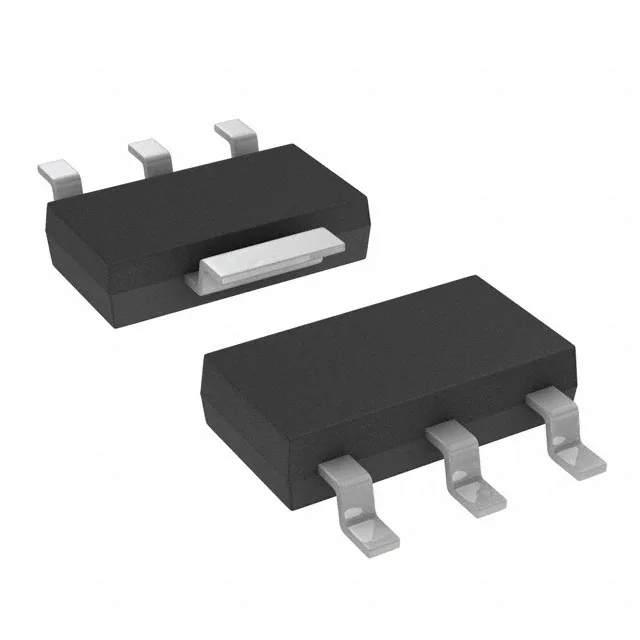
5V fixed output, 200mA, 45V input — the automotive LDO spec that matters
The BD750L2FP3-CE2 is a single-output positive linear regulator from ROHM's Automotive AEC-Q100 series, delivering a fixed 5V at up to 200mA from an input rail that can go as high as 45V. Maximum dropout is 0.7V at the full 200mA load — the headroom between the input and the 5V output must stay above that across the operating range to keep regulation. Quiescent current is 6µA typical, with a 15µA maximum supply current; this keeps the self-drain low in always-on modules like an ECU keep-alive rail.
AEC-Q100 Grade 1 — the temperature band that governs the fit
An engine-bay ECU or transmission controller that sees 105°C ambient on a hot day still has margin before the 125°C limit. The SOT-223-4F (TO-261-4, TO-261AA) surface-mount package is the board-fit footprint; the tab is the output terminal and provides the primary thermal path to the PCB copper. Built-in protection features — over-current and over-temperature — prevent the regulator from failing short under a sustained overload or a hot-spot event on the board.
60dB PSRR at 120Hz — what that means for the downstream rail
Power-supply rejection ratio is 60dB at 120Hz — the ripple frequency from a full-wave rectified 60Hz line. At 60dB, a 1Vpp ripple on the input is attenuated to 1mVpp on the output. For an automotive environment where the alternator ripple and switching-regulator noise sit above 120Hz, the actual rejection at higher frequencies is lower; the datasheet's PSRR-vs-frequency curve (not reproduced here) shows the roll-off.
Active lifecycle, ROHS3, no second-source on record
No pin-compatible second-source is listed in the available documentation. If a BOM hedge is required, the AEC-Q100 qualification limits the substitute pool to other automotive-grade linear regulators in the same package and pinout.