3.5V threshold — the reset trip point
The BD4935FVE-TR is a single-channel voltage detector from ROHM's BD49xxx series that asserts a reset when the monitored supply rail drops below 3.5V. This threshold is the nominal trip point — the system processor or peripheral is held in reset until the supply recovers above the release voltage. For a 3.3V rail, the 3.5V threshold sits above the nominal operating level, so the detector monitors a pre-regulated bus or a higher-voltage supply (e.g., 5V) rather than the core VDD itself.
Push-pull output — no external pull-up resistor
The active-low reset output uses a push-pull totem-pole stage, which means the output actively drives both high and low states. Unlike an open-drain output that requires an external pull-up resistor to define the high level, this part can drive the reset line directly to the supply rail. That saves one resistor per reset net on the BOM and eliminates the rise-time delay from an RC pull-up network — useful when the downstream reset input has a low threshold or fast edge requirement.
The 105°C ceiling is the ambient rating (TA), not the junction — derating for self-heating is minimal for a voltage detector drawing microamps of quiescent current, so the full ambient range is usable in practice.
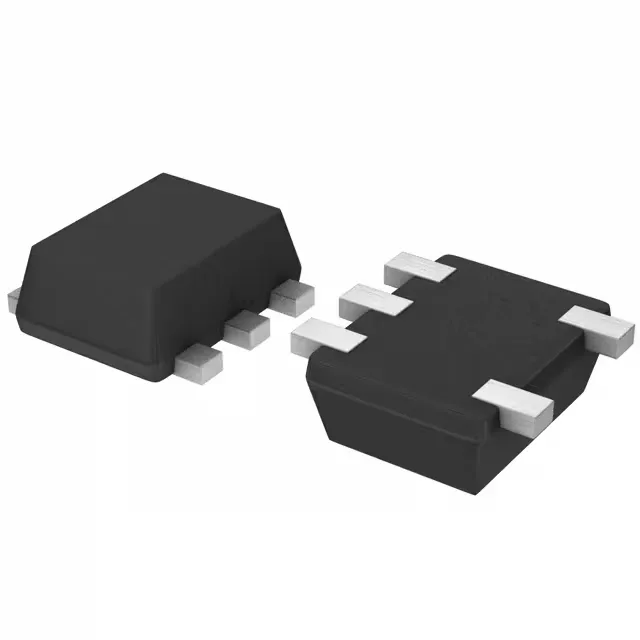
SOT-665 / 5-VSOF — board-area footprint
Housed in a SOT-665 package (supplier device package 5-VSOF), this part occupies roughly 1.6 mm × 1.6 mm of board area — about half the footprint of a standard SOT-23-5. That matters for space-constrained layouts: sensor modules, portable instruments, and multi-rail power sequencers where every square millimetre is budgeted.
ROHS3 compliant.