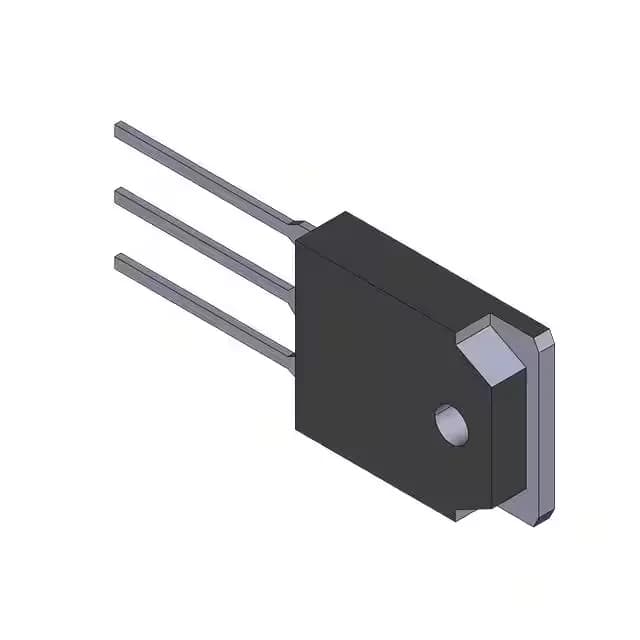
300 V N-Channel MOSFET in a full-pack TO-220
The H5N3007FL-M0-E#T2 is an N-channel power MOSFET rated for 300 V drain-to-source voltage and 15 A continuous drain current at 25°C. It comes in a TO-220-3 Full Pack package — the fully isolated tab means you can bolt it directly to a heatsink without an insulating pad, which saves assembly time on a rework bench. The 160 mOhm maximum on-resistance at 7.5 A and 10 V gate drive is a solid middle-ground for a 300 V device: conduction losses are manageable in a 35 W dissipation budget, and the full-pack body keeps the heatsink electrically cold. Gate charge is 80 nC at 10 V. Input capacitance is 2180 pF at 25 V drain bias.
Package and mounting
The TO-220-3 Full Pack (supplier device package TO-220FL) is a through-hole part with the metal tab fully encapsulated in epoxy. No exposed drain pad — that is the key difference from a standard TO-220. You do not need a silicone pad or mica washer; the part is electrically isolated to the mounting surface. The thermal path is through the plastic body, so expect higher junction-to-case thermal resistance than a standard TO-220. The 35 W power dissipation at case temperature is the practical limit — derate from there if your ambient is above 25°C. Through-hole mounting uses a mounting screw and thermal grease. The full-pack body is thicker than a standard TO-220 — verify heatsink clip or screw length accommodates the extra plastic.
Thermal and drive considerations
The maximum operating junction temperature is 150°C — standard for a silicon MOSFET. The gate-source voltage is rated ±30 V maximum, which gives good margin against gate-drive overshoot in a noisy switching environment. The 4 V gate threshold at 1 mA drain current means the part is fully enhanced with a 10 V gate drive, but it starts conducting well below that — useful if the gate-drive supply droops during startup.
Sourcing and lifecycle
The H5N3007FL-M0-E#T2 is listed as Active on the manufacturer's product status — no end-of-life notice, no last-time-buy window. It is a current-production part, so you can qualify it into a new BOM without worrying about a forced redesign mid-cycle.