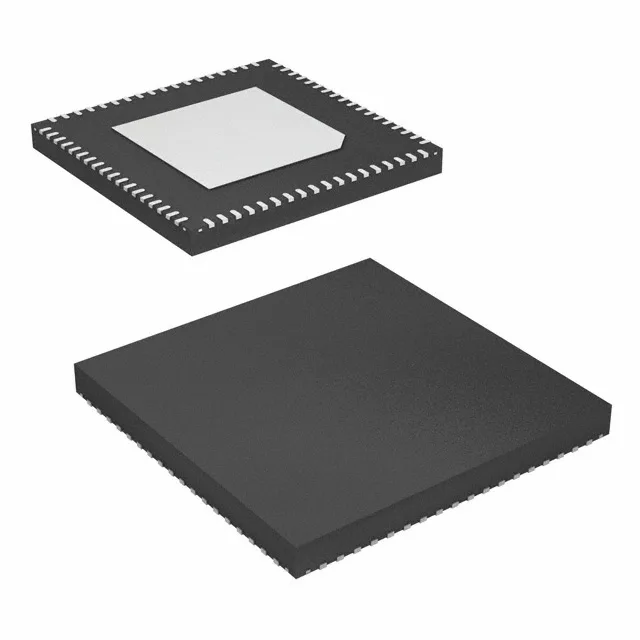
PLL clock generator with 1:19 HCSL fanout for PCIe and QPI
The Renesas 9ZXL1950DKILF is a PLL-based clock generator that takes a single differential clock input and distributes it to 19 HCSL outputs. It is designed specifically for Intel QPI and PCI Express (PCIe) reference clock trees, where a clean, low-jitter fanout buffer with deterministic skew is needed across multiple lanes or sockets. The 1:19 ratio is the highest fanout in the 9ZXL19xx family — compare to the 1:12 of the 9ZXL1231EKILF or the 1:8 of the 9ZXL0851EKKLF. That means a single 9ZXL1950 can replace two or three smaller fanout buffers, saving board area and reducing the number of PLLs in the clock tree. All 19 outputs are differential HCSL, and the part supports differential input as well, so it fits into a fully differential clock distribution chain without single-ended conversion.
400 MHz ceiling and PCIe generation fit
The maximum output frequency of 400 MHz covers PCIe Gen 1 through Gen 4 reference clock requirements (100 MHz base with spread-spectrum) and Intel QPI speeds up to 400 MHz. For Gen 5 at 100 MHz with tighter jitter specs, the 400 MHz ceiling is not the limit — the jitter performance at 100 MHz is what matters, and this part is characterized for that use case. The supply range of 3.135 V to 3.465 V aligns with the 3.3 V PCIe rail, including the ±5% tolerance typical in server and switch designs.