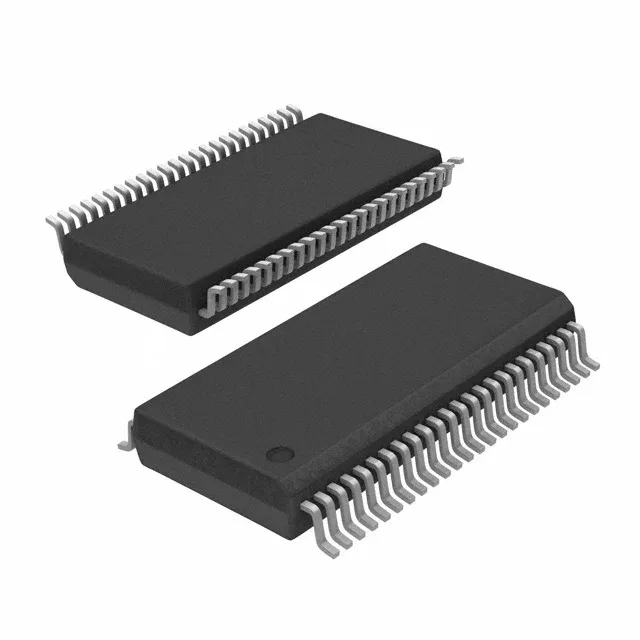
400 MHz PLL clock generator with 1:9 HCSL fanout
The Renesas 9FG108EGLFT is a PLL-based frequency timing generator designed to produce up to nine HCSL clock outputs from a single crystal or clock input. It targets Intel CPU server platforms, PCI Express, and SATA interfaces, where low-jitter, differential HCSL signalling is required for the reference clocks. The part operates from a 3.3V supply (3.135V to 3.465V) and delivers a maximum output frequency of 400 MHz, covering the reference clock needs of PCIe Gen3/4 and SATA 3.0. The input side accepts either a crystal or a single-ended clock, while the nine outputs are differential HCSL — no external termination resistors needed for the output pair. Packaged in a 48-lead TSSOP (48-TFSOP, 6.10 mm wide), it is a surface-mount device rated for the commercial temperature range of 0°C to 70°C. That temperature grade suits server motherboards, storage arrays, and networking equipment in climate-controlled racks, but it is not specified for extended or industrial environments.
Differential input? No. Differential output? Yes — and that matters for layout
The 9FG108EGLFT accepts a single-ended clock or crystal input (No/Yes for differential input/output), so the input trace is a simple 50 Ω route. The nine HCSL outputs are differential pairs that need controlled-impedance routing (typically 100 Ω differential) on the PCB. If you are used to LVDS or LVPECL fanout, HCSL has a smaller swing (~700 mV p-p) and DC-coupled to the receiver, which simplifies the AC-coupling capacitor decision — none needed unless the receiver datasheet says otherwise. With a 1:9 fanout, the PLL's output buffers are individually programmable for slew rate and amplitude via the chip's configuration registers, so you can tune each output to match the trace length or the receiver's input threshold. The 400 MHz ceiling means the part can generate 100 MHz, 125 MHz, or 200 MHz reference clocks for PCIe, SATA, or Ethernet controllers without an external divider.
Active, RoHS3, and no LTB on the horizon
It is also RoHS3 compliant, which covers the EU RoHS exemption list as of 2023 — no lead, mercury, or cadmium above the threshold limits. For a server clock generator that may stay in a BOM for several years, the active status means you are not forced into a redesign cycle for obsolescence.