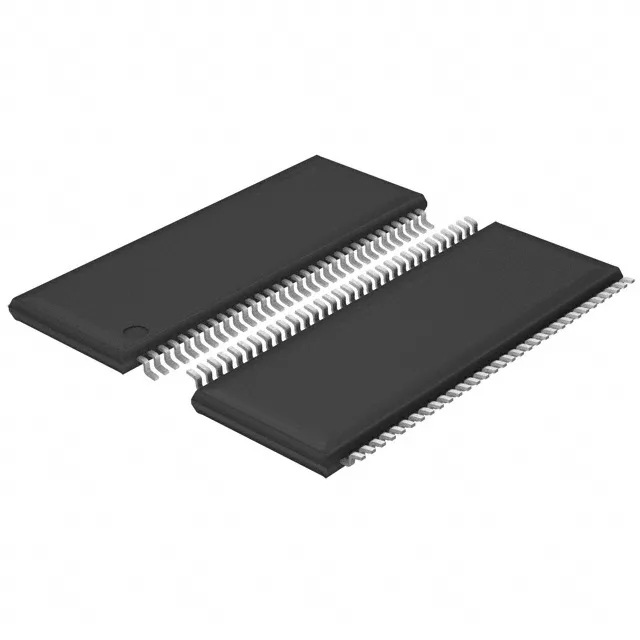
Romley-platform PLL synthesizer with 19-output fanout
The Renesas 932SQ420DGLFT is a PLL-based clock synthesizer built for the Intel Romley server/workstation chipset. It takes a single crystal input and generates 19 copies of a differential HCSL output clock, all phase-locked to the reference. The maximum output frequency is 146.7 MHz, which covers the platform's reference clock needs for the CPU, PCH, and PCIe lanes without external buffers. The supply range is 3.135 V to 3.465 V, so it runs cleanly off a 3.3 V rail with typical tolerance. Packaged in a 64-TSSOP (0.240" body width, 6.10 mm), surface-mount. The mounting is standard reflow; no special thermal management needed at this power level.
What the 1:19 fanout and HCSL output mean for the board
The 1:19 input-to-output ratio is the headline feature: one crystal feeds 19 differential clock outputs. That saves the cost and board area of multiple fanout buffers and keeps the clock tree simple. The outputs are HCSL (High-Speed Current Steering Logic), which is the standard differential signalling for Intel platform clocks — it's what the Romley PCH and CPU expect on their reference clock inputs. Because the input is a single-ended crystal (not a differential reference), the PLL does the conversion internally. That means the crystal and its two load capacitors are the only external components needed for the reference — no external oscillator or balun.