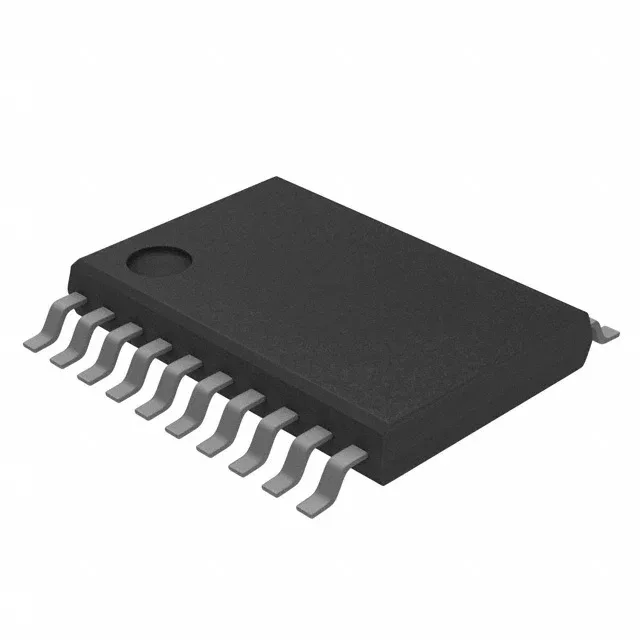
2 GHz fanout buffer with input mux — what it covers on the board
The Renesas 853S014AGILFT is a 2:5 differential fanout buffer with an integrated 2:1 input multiplexer, designed to distribute a selected high-speed clock or data signal to five outputs with minimal skew. It accepts CML, LVDS, LVPECL, or SSTL inputs and delivers ECL or LVPECL outputs, all differential, making it a fit for distributing reference clocks in networking switches, FPGA-based systems, and telecom line cards where signal integrity at 2 GHz matters.
Input flexibility and output drive — matching the signalling standard
The buffer accepts four common differential input standards — CML, LVDS, LVPECL, and SSTL — which means it can sit between a variety of clock sources (oscillators, SerDes, FPGA PLL outputs) and the downstream loads without needing a level translator. The outputs are ECL or LVPECL, so the receiving devices must be compatible with that swing and common-mode voltage; if the load expects LVDS, an external resistor network or a different buffer is needed. The 2:5 ratio with an internal mux lets one of two input sources be selected and fanned to five outputs, saving the board space and trace length that a separate mux plus fanout tree would consume. All signal paths are differential, which rejects common-mode noise and keeps jitter low on long board traces.
Supply rail and temperature — where it lives on the board
The supply range of 2.375 V to 3.8 V covers both 2.5 V and 3.3 V rails, so no dedicated regulator is needed if one of those is already on the board.
For buyers evaluating second-source options, the closest functional peer is the 8SLVP1204ANLGI8 — a 2:4 fanout buffer with the same 2 GHz maximum, LVPECL outputs, and similar input types. The 853S014AGILFT offers a 2:5 ratio versus 2:4, so the pinout and fanout count differ; a board redesign would be required to swap.