What this PLL clock generator does on your board
The 501MILF is a single-circuit PLL-based clock generator from the LOCO™ series, accepting a clock or crystal input and producing a CMOS output up to 140 MHz. It multiplies the input frequency (divider/multiplier = No/Yes) without needing a differential pair — single-ended in and out. The wide supply range from 3 V to 5.25 V means it can sit on a 3.3 V FPGA rail or a 5 V legacy logic bus without a separate regulator.
140 MHz output — what that buys you
The 140 MHz ceiling covers most Ethernet MAC/PHY reference clocks (25, 50, 125 MHz), FPGA fabric clocks, and high-speed ADC sampling rates. Because the PLL multiplies rather than divides, you can feed a lower-frequency crystal and let the internal loop generate the higher-speed rail — useful when board space or BOM cost pushes you away from a canned oscillator. The 1:1 input-to-output ratio means the PLL is locked to the reference; there's no internal divider stage to generate a second frequency.
Package and mounting — the rework bench view
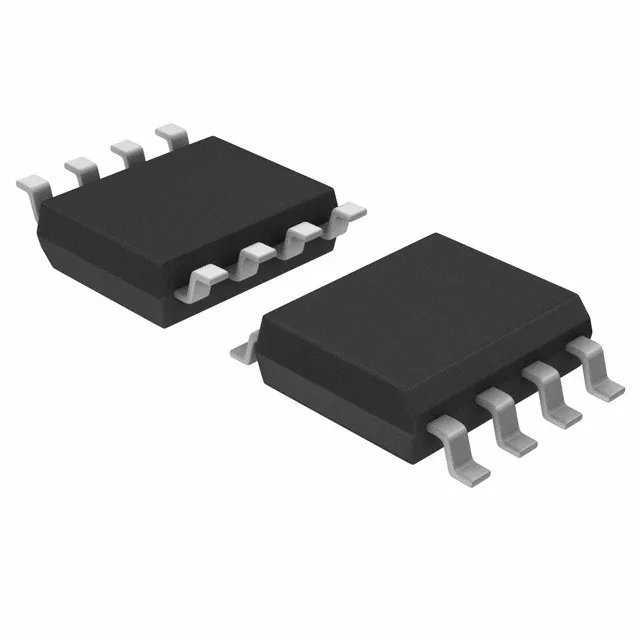
Housed in an 8-SOIC (3.90 mm wide body), the 501MILF is a surface-mount part that reflows easily with a standard profile. No exposed pad, so thermal management is straightforward — the industrial temp range doesn't demand a heatsink at these clock speeds.
Lifecycle and sourcing — no last-time-buy drama
Marked as Active in production and ROHS3 compliant, the 501MILF is not on any end-of-life watch. For dual-sourcing or a pin-compatible backup, check the LOCO™ family — there are parts with the same 8-SOIC footprint and supply range that differ only in output frequency or divider ratio.