TOP258PN
Power Integrations · TOPSwitch®-HX Series
IC OFFLINE SWITCH FLYBACK 8DIP
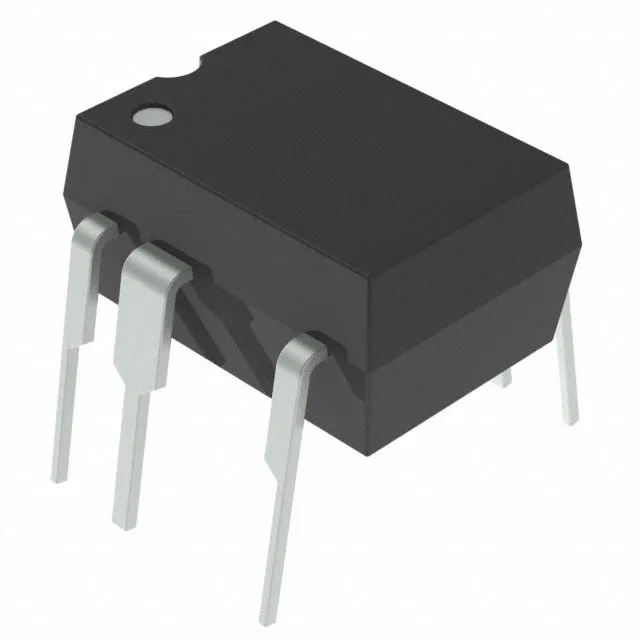
MOQ 1 · Tube · RoHS · EIA-481 · DAP/DDP · T/T
Technical specifications
| Parameter / Attribute | Specification / Value |
|---|---|
| Series | TOPSwitch®-HX |
| Mounting | Through Hole |
| Voltage - breakdown | 700V |
| Power (Watts) | 48 W |
| Frequency - switching | 66kHz |
| Duty cycle | 78% |
| Operating temperature | -40°C~150°C(TJ) |
| Package | Tube |
| Topology | Flyback |
| Case | 8-DIP (0.300\", 7.62mm), 7 Leads |
| Fault protection | Current Limiting, Over Temperature, Over Voltage |
| Output isolation | Isolated |
| Internal switch | Yes |
Need Stock or a Drop-in Second-Source for TOP258PN?
Package: TO-220-7 (Y package) · Pin-compatible replacements with immediate Shenzhen spot stock
The TOP250YN is the high-power member of the TOPSwitch-GX generation: a 700V integrated offline switcher rated up to 290W at 230VAC, the chip that runs industrial auxiliary and standby supplies, metering front ends and a generation of adapters - with a minimal external part count in the tradition of Power Integrations, usually just the feedback loop (a TL431 reference and an optocoupler) around it. The generational map is real substitution material: the HX parts (TOP258 class) are pin-compatible in many sockets with lower conduction losses and better light-load behavior, the JX generation (TOP264) moved to new bodies, and the TinySwitch line that shares the brand is a completely different control architecture that must never be crossed family by feel.
Verified Pin-Compatible Replacements (3 verified alternatives)
The HX Generation in the Same Socket
Shenzhen Spot Stock (24-48h Dispatch)
The next generation in the same 700V Y-package socket - pin compatible in many designs by the vendor own guidance: lower on-resistance (a 1.8 ohm class against the 3.0 ohm of the GX parts), multi-mode operation for light-load efficiency, soft-start extended to 17ms, and auto-restart duty cut to about 2 percent.
Same 700V class and the same line-sensing and frequency pins in the GX layout - the design guide carries the details.
The JX Generation - New Body, Lower Standby
Shenzhen Spot Stock (24-48h Dispatch)
The current generation: a 725V MOSFET, no-load consumption under 100mW, 132kHz standard with a 66kHz efficiency option - in eSIP/eDIP/eSOP bodies that broke away from the classic Y package.
725V against 700V; the efficiency and standby numbers are the headline.
The Brand Neighbor That Is a Different Machine
Shenzhen Spot Stock (24-48h Dispatch)
The TinySwitch line solves the same problem at a tenth of the power (about 13-23W) with a different control scheme entirely: on/off cycle-skipping instead of PWM - no loop compensation, minimal parts, and no path to the TOPSwitch power class (practical ceiling far below the 250 series).
Same offline culture; the switching behavior is a different kind of thing, which is why the brand page groups them separately.
Buyer & Quality Checklist for Sourcing Alternatives
- GX to HX is the pin-compatible generation step (TOP250 to TOP258 in many sockets per the vendor guidance): same 700V Y package, lower RDS(on), better light-load behavior, 17ms soft-start, auto-restart reduced to about 2 percent - validate against the HX reference design when crossing.
- JX (TOP264 class) moved to eSIP/eDIP/eSOP bodies with 725V and sub-100mW standby: the current-generation answer, and a layout decision for new boards rather than a repair substitution.
- TOPSwitch and TinySwitch are different control architectures (PWM against on/off cycle skipping) for different power classes (hundreds of watts against tens): the shared brand is not a substitution license in either direction.
- The feedback loop is half the supply and most of its failures: these designs pair the switcher with a TL431 reference and an optocoupler - the "dead chip" that hiccups is usually the loop reporting an output or reference fault. Check opto and reference before condemning the integrated switcher.
- The line-sense and frequency pins carry protections (OVP, line UV/OV, 66/132kHz selection on newer generations): a replacement fitted into an old network may work at power-on while running with shifted protection thresholds.
- Auto-restart hiccup behavior is a diagnostic, not a defect: the control-pin waveform during restart tells the fault story (output short, overload, loop open) before any part is desoldered.
Frequently Asked Technical Questions
Q: Can a TOP258YN replace a TOP250YN?
A: In many sockets yes - the HX and GX generations share the 700V Y package and are pin compatible by vendor guidance, with lower conduction losses and improved light-load behavior as the upgrade. Re-check the line-sense and feedback networks against the HX datasheet reference design.
Q: Can a TinySwitch TNY277 replace a TOPSwitch part?
A: No: different control architecture (on/off cycle skipping against PWM), different power class (tens of watts against hundreds) and different packages. They share a vendor and nothing else - route by wattage first.
Q: Why does the power supply click and restart after a switcher replacement?
A: The auto-restart hiccup mode is the chip reporting a real fault - most often in the feedback loop (TL431 reference, optocoupler, output overload) rather than the switcher itself. Probe the control pin and the loop before replacing the integrated switcher again.