What the TVS clamp chain means for your board
The 1.5SMCJ8.5CA_R1_00001: The three voltage specs form a selection chain. The 8.5 V reverse standoff is the maximum working voltage the protected rail sees continuously without the TVS conducting. The 9.44 V minimum breakdown marks where the Zener characteristic turns on under a rising transient. Confirm the downstream absolute-max rating before committing — the TVS protects only if the clamped voltage stays below it.
Peak pulse rating and thermal headroom
The corresponding 104.2 A peak pulse current is the current the diode must survive conducting at the clamping voltage during that event. The 150°C maximum junction temperature gives meaningful thermal headroom in enclosed panels where ambient can run to 85°C: derating begins above that, but the SMC package dissipates the transient heat adequately if the board copper around the pads is sized per the datasheet thermal recommendations.
Where bidirectional TVS diodes protect circuits
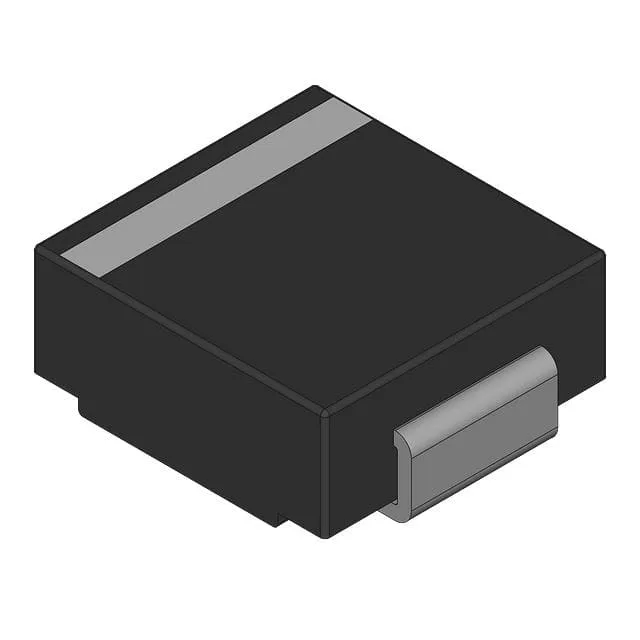
The 1.5SMCJ series covers the 1.5 kW power class for board-level transient suppression on DC power rails, data lines, and control interfaces. The bidirectional polarity means it clamps both polarities of surge — useful on floating rails, transformer-coupled interfaces, or any node that swings symmetrically. The SMC (DO-214AB) package is the standard large body for this power class, occupying more board area than a SMA but spreading the transient thermal load over a larger die attach.
Active status and sourcing posture
For a live BOM line this means the part is orderable without a last-time-buy risk in the near term.