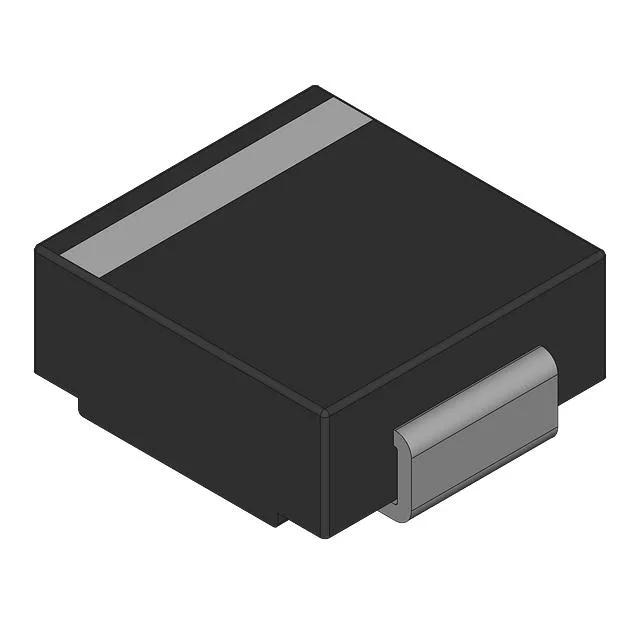
1500W peak pulse — what the clamping spec means for the board
The 1.5SMCJ78AS_R1_00001: The clamping voltage of 126 V at 11.4 A peak pulse is the voltage the protected node sees during the event; that ceiling must stay below the absolute-max rating of every downstream component on that net.
78 V standoff and 86.7 V breakdown — selecting the protected rail
Reverse standoff voltage is the continuous working voltage the TVS sees without conduction — 78 V typ means it sits idle on a 48 V or 60 V rail with margin. The minimum breakdown of 86.7 V ensures the device does not clip normal signal swings; it only turns on once the transient pushes the node above that threshold. The clamping-ceiling-to-standoff-ratio of roughly 1.6× gives downstream bus-capacitor and regulator input stages enough headroom for typical surge events without premature clamping.
DO-214AB SMC package — surface-mount transient protection
The DO-214AB (SMC) body mounts directly to the PCB surface and dissipates the clamping-event heat through the cathode tab to the copper pad beneath. With a maximum junction temperature of 150 °C and an operating range down to -55 °C, the part covers industrial and outdoor-equipment deployments — the -55 °C cold end matters for equipment that must power on after cold soak without waiting for bus warm-up.